


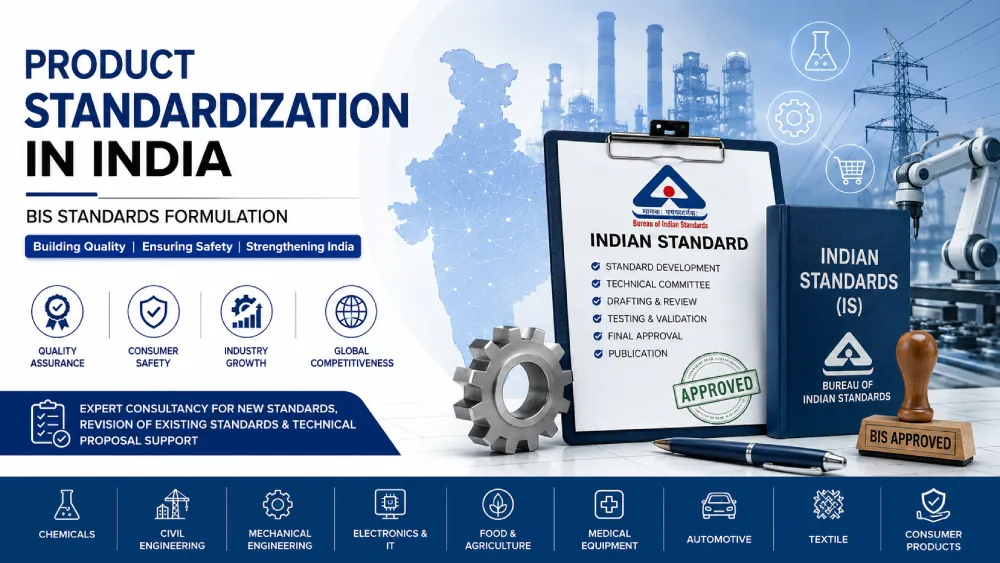
Standards play a crucial role in ensuring the quality, safety, performance, and reliability of products and services. They establish uniform technical specifications that manufacturers, businesses, regulatory authorities, and consumers can rely on. Product standardization not only improves product quality but also promotes innovation, facilitates trade, enhances consumer confidence, and supports the overall growth of industries.
In India, the responsibility for developing and publishing Indian Standards (IS Standards) rests with the Bureau of Indian Standards (BIS), the National Standards Body established under the Bureau of Indian Standards Act, 2016. BIS formulates standards across various industrial sectors by working closely with government departments, industry experts, research institutions, manufacturers, consumer organizations, testing laboratories, and technical committees.
As industries continue to evolve with new technologies and innovations, there is a growing need to develop new standards and revise existing ones to align with international best practices. Updated standards help manufacturers produce safer, higher-quality products while improving their competitiveness in both domestic and international markets.
Organizations introducing innovative products often encounter situations where no applicable Indian Standard exists. In such cases, a proposal for a new standard formulation or the revision of an existing standard can be submitted to the Bureau of Indian Standards for consideration.
At Bharati Global Compliances, we provide professional consultancy for Product Standardization and BIS Standards Formulation. Our experts assist manufacturers, industry associations, research organizations, and government agencies in preparing technical proposals, drafting standards, coordinating with BIS, and supporting the complete standards formulation process.
What is Product Standardization?
Product Standardization is the systematic process of developing uniform technical specifications, quality requirements, testing methods, safety parameters, terminology, and performance criteria for a particular product, material, process, or service.
The objective of standardization is to ensure that products manufactured by different organizations maintain consistent quality, reliability, safety, and compatibility. Standardization also minimizes technical barriers to trade, encourages fair competition, and protects consumer interests.
Once approved by the Bureau of Indian Standards (BIS), these technical requirements are published as Indian Standards (IS Standards) and serve as nationally recognized benchmarks for manufacturing, testing, certification, and quality assurance.

Objectives of Product Standardization
The primary objective of standardization is to establish scientifically developed standards that benefit manufacturers, consumers, regulatory authorities, and the economy as a whole.
Some of the key objectives include:
- Establish uniform quality requirements for products and services.
- Improve product safety and consumer protection.
- Promote consistency in manufacturing practices.
- Encourage innovation and technological advancement.
- Facilitate domestic and international trade.
- Harmonize Indian Standards with international standards wherever applicable.
- Improve industrial productivity and operational efficiency.
- Support sustainable manufacturing practices.
- Strengthen quality assurance systems.
- Enhance the global competitiveness of Indian products.
Importance of Standardization
Product standardization has become increasingly important as industries adopt advanced technologies and global supply chains. Well-defined standards create confidence among manufacturers, buyers, regulators, and consumers by ensuring that products consistently meet established quality and safety requirements.
Some of the major benefits of product standardization include:
- Ensures consistent product quality.
- Improves consumer confidence.
- Enhances product safety and reliability.
- Reduces manufacturing defects.
- Simplifies quality control processes.
- Supports innovation through structured technical requirements.
- Promotes exports by meeting international expectations.
- Improves regulatory compliance.
- Encourages fair competition within industries.
- Facilitates acceptance of products in domestic and global markets.
Role of the Bureau of Indian Standards (BIS)
The Bureau of Indian Standards (BIS) is India’s National Standards Body responsible for the development, publication, revision, and implementation of Indian Standards.
BIS works in collaboration with technical experts from industry, academia, research institutions, government departments, laboratories, consumer organizations, and professional bodies to formulate standards covering a wide range of products, processes, and services.
The key responsibilities of BIS include:
- Formulation of new Indian Standards.
- Revision and updating of existing standards.
- Harmonization with international standards.
- Development of testing methods.
- Promotion of quality and safety standards.
- Product certification under various BIS schemes.
- Supporting industrial development and innovation.
- Protecting consumer interests through quality assurance.
By continuously updating standards to reflect technological advancements and market needs, BIS plays a vital role in strengthening India’s quality infrastructure and promoting sustainable industrial growth.
Who Can Submit a Proposal for a New Indian Standard?
The Bureau of Indian Standards (BIS) encourages participation from various stakeholders in the development and revision of Indian Standards. Any individual, organization, government department, research institution, industry association, or professional body with technical expertise or industry knowledge can submit a proposal for the formulation of a new standard or the revision of an existing one.
Typically, proposals may be submitted by:
- Central Government Ministries and Departments
- State Governments and Union Territory Administrations
- Public Sector Undertakings
- Manufacturers and Industrial Units
- Industry Associations
- Consumer Organizations
- Research and Development Institutions
- Universities and Academic Institutions
- Professional Bodies
- BIS Technical Committee Members
- Testing Laboratories
- Certification Bodies
Each proposal is evaluated based on its technical relevance, industry requirements, consumer interest, and overall contribution to national development.
Major Sectors Covered Under BIS Standardization
The Bureau of Indian Standards develops standards across a wide range of industries to support quality improvement, safety, innovation, and sustainable development.
Some of the major sectors covered include:
- Chemicals
- Civil Engineering
- Mechanical Engineering
- Metallurgical Engineering
- Electronics and Information Technology
- Electrotechnical Engineering
- Food and Agriculture
- Medical Equipment and Healthcare
- Petroleum, Coal and Related Products
- Textile and Apparel
- Water Resources
- Transport Engineering
- Production and General Engineering
- Services Sector
- Management Systems
- Environmental Protection
- Renewable Energy
- Construction Materials
- Consumer Products
As new technologies continue to emerge, BIS regularly introduces new standards and revises existing ones to meet evolving industry requirements.
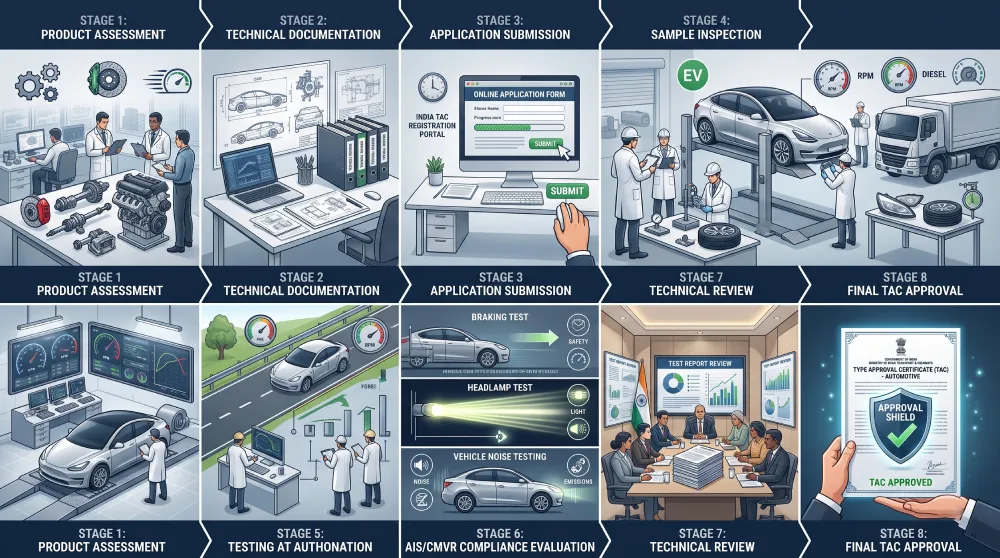
Process of Standards Formulation in India
The formulation of an Indian Standard follows a structured and transparent procedure to ensure that every standard is technically sound, practical, and aligned with national and international requirements.
Step 1: Submission of Proposal
The process begins when a proposal for a new standard, revision, amendment, or withdrawal of an existing standard is submitted to the Bureau of Indian Standards (BIS).
The proposal generally includes technical details, product specifications, justification for the proposed standard, and the expected benefits for industry and consumers.
Step 2: Preliminary Examination
After receiving the proposal, the concerned Division Council of BIS conducts a preliminary review to determine whether the proposal addresses an actual industry need and whether the development of a new or revised standard is justified.
The proposal is assessed based on factors such as:
- Industry demand
- Consumer safety
- Technological advancements
- Regulatory requirements
- National priorities
- International practices
Step 3: Formation of Technical Committee
If the proposal is found suitable, BIS assigns the work to an existing Technical Committee or constitutes a new committee comprising experts from relevant industries, government departments, research organizations, testing laboratories, academic institutions, and consumer groups.
The committee is responsible for studying the proposal and developing the draft standard.
Step 4: Drafting of the Standard
The Technical Committee prepares a draft standard after conducting detailed technical studies, reviewing existing Indian and international standards, evaluating product specifications, testing requirements, quality parameters, safety provisions, and performance criteria.
The committee also considers:
- Product functionality
- Manufacturing practices
- Consumer protection
- Environmental impact
- Industry feedback
- International harmonization
The objective is to create a comprehensive and practical standard that can be effectively implemented by manufacturers and other stakeholders.
Step 5: Public Consultation and Review
Once the draft standard is prepared, it may be circulated among stakeholders for comments and suggestions. Manufacturers, industry associations, government agencies, testing laboratories, and other interested parties can provide feedback on the proposed draft.
The Technical Committee reviews all comments received and incorporates necessary modifications wherever appropriate.
Step 6: Approval by the Division Council
After finalizing the draft, the Technical Committee submits it to the concerned Division Council for approval.
The Division Council examines the draft to ensure that it meets the objectives of standardization and complies with BIS procedures before recommending it for publication.
Step 7: Publication of the Indian Standard
Upon receiving final approval, the Bureau of Indian Standards (BIS) officially publishes the new or revised Indian Standard (IS).
Once published, the standard becomes the recognized national benchmark for quality, safety, testing, manufacturing, and conformity assessment for the respective product, process, or service.
Documents Required for Standards Formulation Proposal
The exact documentation may vary depending on the nature of the proposal. However, applicants are generally required to provide:
- Covering letter
- Proposal for new standard or revision
- Product description
- Technical specifications
- Product drawings or designs, where applicable
- Manufacturing process details
- Product testing reports
- Relevant research papers or technical studies
- Existing national or international standards, if available
- Justification for the proposed standard
- Market demand analysis
- Supporting technical documents
- Any additional information requested by BIS
Providing complete and technically accurate documentation helps facilitate a smoother evaluation process and improves the likelihood of timely consideration by the Bureau of Indian Standards.
How Bharati Global Compliances Assists in Standards Formulation
Developing a new Indian Standard or revising an existing one requires extensive technical expertise, industry knowledge, regulatory understanding, and proper coordination with the Bureau of Indian Standards (BIS). Preparing a comprehensive proposal involves detailed research, technical documentation, product evaluation, and continuous interaction with the concerned authorities throughout the standardization process.
At Bharati Global Compliances, we provide end-to-end consultancy services for BIS Standards Formulation. Our experienced team works closely with manufacturers, industry associations, research organizations, startups, government agencies, and product developers to prepare technically sound proposals that align with BIS requirements and industry best practices.
Our objective is to simplify the standards formulation process while ensuring that every proposal is supported by accurate technical data, relevant documentation, and industry-specific expertise.
Our Standards Formulation Services
We offer comprehensive support throughout every stage of the standard development process, including:
- Consultancy for New Indian Standard Formulation
- Revision and Amendment of Existing BIS Standards
- Preparation of Technical Proposals
- Product Specification Development
- Technical Documentation Support
- Gap Analysis of Existing Standards
- International Standards Comparison
- Draft Standard Preparation
- Coordination with BIS Technical Committees
- Regulatory Advisory Services
- Technical Research and Data Analysis
- End-to-End Project Management
Our team ensures that every proposal is professionally prepared and complies with the applicable BIS procedures.
Industries We Serve
Our standardization consultancy services are designed to support businesses across diverse industrial sectors.
We provide assistance to:
- Chemical Manufacturers
- Electronics and Electrical Industries
- Medical Device Manufacturers
- Automotive Component Manufacturers
- Construction Material Manufacturers
- Food Processing Industries
- Textile Manufacturers
- Packaging Industries
- Engineering Companies
- Renewable Energy Manufacturers
- Consumer Goods Manufacturers
- Plastic and Polymer Industries
- Industrial Equipment Manufacturers
- Metal and Metallurgical Industries
- Research and Development Organizations
- Government Departments
- Industry Associations
- Startups Developing Innovative Products
Whether you are introducing a completely new product or seeking improvements to an existing standard, our experts provide practical guidance throughout the process.
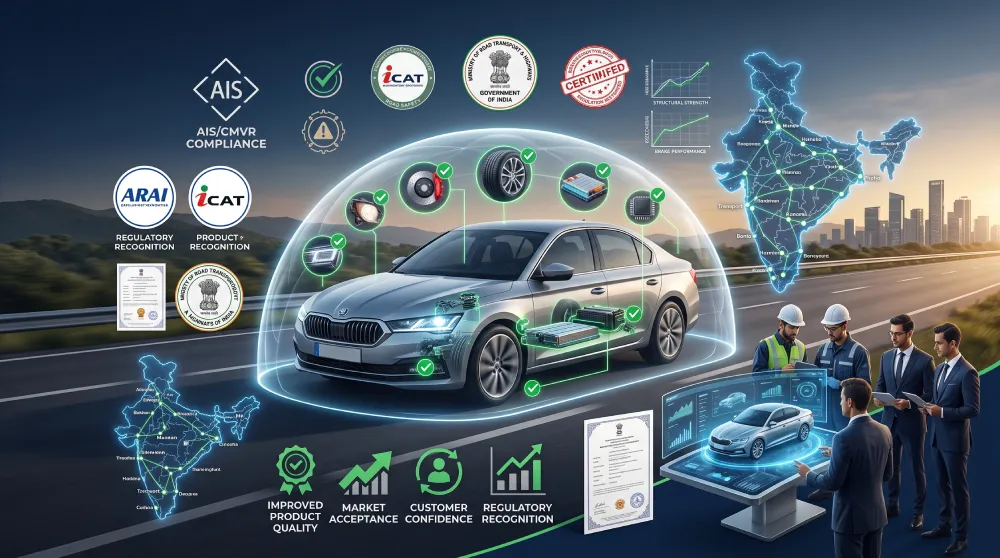
Benefits of BIS Standards Formulation
Developing or revising an Indian Standard offers significant advantages for manufacturers, industries, regulators, and consumers. A well-defined standard establishes uniform quality benchmarks, enhances product reliability, and promotes confidence in the marketplace.
Some of the major benefits include:
- Establishes nationally recognized quality standards.
- Promotes product safety and consumer protection.
- Supports innovation and technological advancement.
- Encourages consistent manufacturing practices.
- Improves product quality and reliability.
- Facilitates domestic and international trade.
- Reduces technical barriers in global markets.
- Enhances industry competitiveness.
- Aligns Indian Standards with international best practices.
- Strengthens regulatory compliance.
- Encourages sustainable industrial development.
- Builds consumer trust and market acceptance.
Standardization not only benefits individual businesses but also contributes to the overall growth of India’s manufacturing ecosystem.
Why Choose Bharati Global Compliances?
Preparing a proposal for BIS Standards Formulation requires technical expertise, regulatory knowledge, and a clear understanding of industry requirements. At Bharati Global Compliances, we combine practical industry experience with in-depth regulatory knowledge to deliver reliable consultancy services for standards development.
Why businesses choose us:
- Experienced Compliance Professionals
- Expertise in BIS Regulations
- Industry-Specific Technical Knowledge
- Complete Documentation Assistance
- Proposal Drafting Support
- Coordination with BIS Authorities
- End-to-End Consultancy
- Transparent Process
- Timely Project Execution
- PAN India Services
- Dedicated Client Support
Our consultants work closely with clients to ensure that every proposal is technically comprehensive, professionally documented, and aligned with the latest BIS guidelines.
Timeline for Standards Formulation
The time required for formulating or revising an Indian Standard depends on several factors, including the complexity of the proposal, technical evaluation, stakeholder consultations, and approval by the Bureau of Indian Standards.
Generally, the process may take several months, depending on:
- Nature of the proposed standard
- Technical complexity
- Industry consultations
- Review by the Technical Committee
- Public comments and feedback
- Approval by the Division Council
- Final publication by BIS
Since each proposal undergoes multiple stages of evaluation, the overall timeline may vary from one project to another.
Challenges in Standards Formulation
The development of a new Indian Standard involves extensive technical evaluation, industry consultation, and regulatory review. Since standards are intended to serve manufacturers, consumers, testing laboratories, and regulatory authorities, every proposal must be technically accurate, practical, and aligned with current industry requirements.
Some of the common challenges faced during the standards formulation process include:
Limited Technical Documentation
Many proposals are delayed due to incomplete product specifications, insufficient technical data, or lack of supporting research. Comprehensive documentation is essential for evaluating the need and feasibility of a new or revised standard.
Rapid Technological Advancements
Industries are continuously evolving with the introduction of new technologies and innovative products. Existing standards may become outdated, making it necessary to periodically revise them to reflect current manufacturing practices and technological developments.
Alignment with International Standards
Wherever possible, Indian Standards are harmonized with internationally recognized standards. Achieving consistency while addressing India’s specific industrial and regulatory requirements can be a complex process that requires detailed technical analysis.
Stakeholder Consultation
The formulation of a standard involves consultation with manufacturers, industry associations, government departments, research institutions, testing laboratories, consumer organizations, and technical experts. Reaching consensus among multiple stakeholders may require several rounds of discussion and review.
Regulatory Compliance
Every proposed standard must comply with the provisions of the Bureau of Indian Standards Act, 2016, relevant government policies, and applicable technical regulations. Ensuring regulatory compliance throughout the process is essential for successful approval.
Best Practices for Preparing a Standards Proposal
A well-prepared proposal significantly improves the likelihood of successful evaluation by the Bureau of Indian Standards. Applicants should ensure that the proposal is supported by accurate technical information and clearly demonstrates the need for the proposed standard.
Some recommended best practices include:
- Clearly define the objective and scope of the proposed standard.
- Provide detailed technical specifications of the product or process.
- Include supporting research, technical studies, and test reports.
- Compare the proposal with existing national and international standards.
- Highlight the benefits for industry, consumers, and regulatory authorities.
- Ensure that all supporting documents are complete and technically accurate.
- Demonstrate the commercial and technical need for the proposed standard.
- Address safety, quality, environmental, and performance requirements.
Following these practices helps facilitate a smoother review process and reduces the likelihood of delays during technical evaluation.
Why Standardization is Important for Businesses
Product standardization offers significant commercial and regulatory advantages for manufacturers and businesses operating in competitive markets. Compliance with recognized standards improves product quality, enhances consumer confidence, and strengthens market credibility.
Some key business benefits include:
- Improves product consistency and quality.
- Enhances customer confidence and satisfaction.
- Supports compliance with regulatory requirements.
- Increases acceptance in domestic and international markets.
- Reduces manufacturing errors and product failures.
- Facilitates product certification under applicable schemes.
- Encourages innovation through structured technical requirements.
- Strengthens brand reputation.
- Improves operational efficiency.
- Creates new market opportunities for manufacturers.
For businesses introducing innovative products, the development of an Indian Standard can also establish industry benchmarks and support long-term market growth.
Conclusion
The formulation of Indian Standards plays a significant role in strengthening India’s quality infrastructure and promoting safe, reliable, and high-quality products across industries. By establishing standardized technical requirements, testing methods, safety parameters, and performance criteria, the Bureau of Indian Standards (BIS) helps manufacturers improve product quality, encourages innovation, protects consumer interests, and enhances the global competitiveness of Indian industries.
Whether it involves developing a new Indian Standard or revising an existing one, the standards formulation process requires detailed technical research, proper documentation, industry consultation, and compliance with BIS procedures. A well-prepared proposal supported by accurate technical information significantly increases the likelihood of successful evaluation and approval.
For manufacturers introducing innovative products, standardization provides a structured framework that facilitates product certification, regulatory compliance, market acceptance, and long-term business growth. It also ensures that products meet evolving industry requirements and align with international best practices wherever applicable.
At Bharati Global Compliances, we offer comprehensive consultancy services for BIS Standards Formulation, helping businesses prepare technical proposals, draft standards, coordinate with BIS authorities, and manage the complete standardization process. Our experienced professionals work closely with clients to ensure that every proposal is technically sound, professionally documented, and aligned with the latest regulatory requirements.