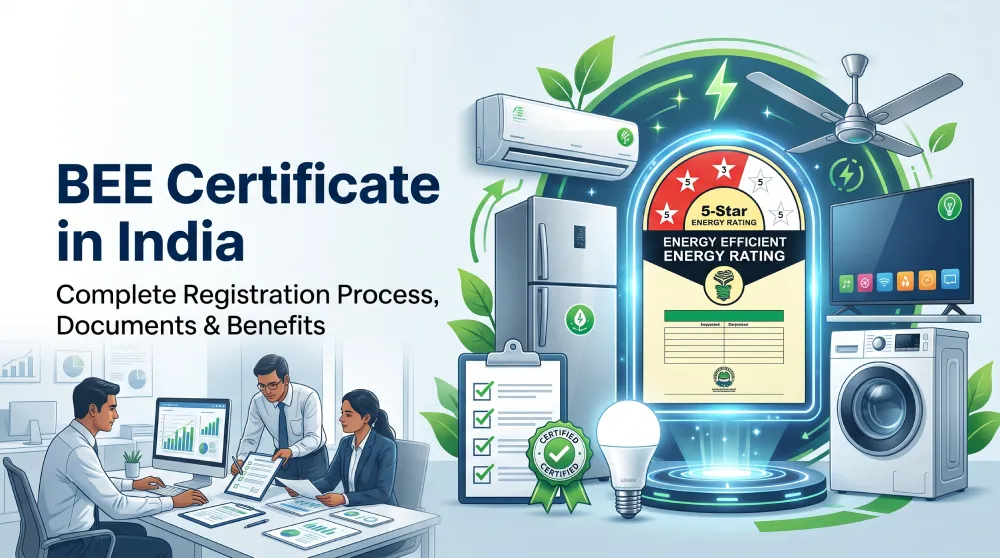
With the growing demand for electricity and increasing environmental concerns, energy conservation has become a key focus for governments and industries worldwide. In India, the Bureau of Energy Efficiency (BEE) plays a crucial role in promoting energy-efficient products and encouraging responsible energy consumption. Through its Star Labelling Programme, BEE helps consumers identify appliances that consume less electricity while maintaining high performance.
For manufacturers and importers, obtaining a BEE Certificate is an essential regulatory requirement for several electrical and electronic products. It demonstrates compliance with the Energy Conservation Act, enhances product credibility, and helps businesses gain a competitive advantage in the Indian market.
Whether you are launching a new product or importing electrical appliances into India, Bharati Global Compliances provides end-to-end assistance with BEE Registration, product testing, documentation, application filing, and certification support, ensuring a smooth and hassle-free approval process.
What is a BEE Certificate?
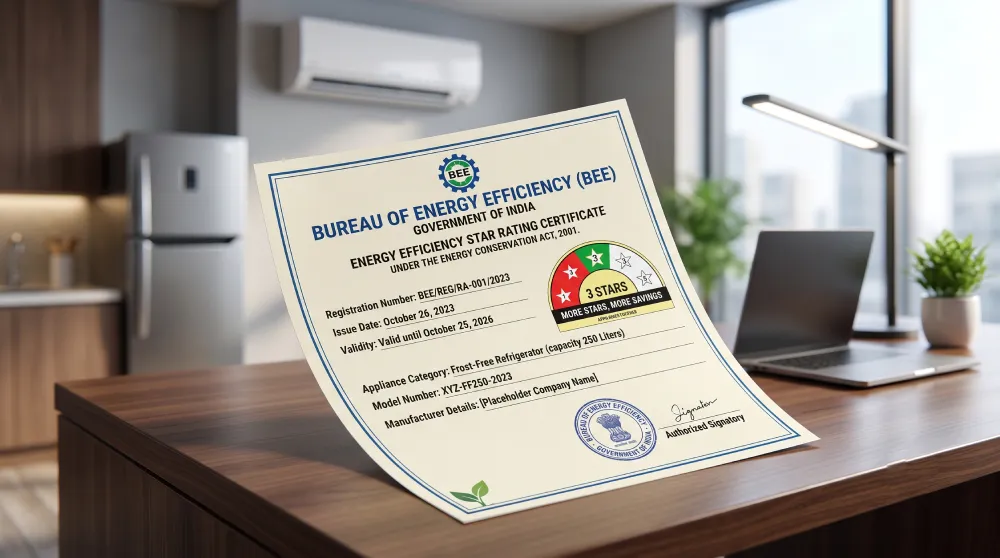
A BEE Certificate is an official certification issued by the Bureau of Energy Efficiency (BEE), an autonomous organization operating under the Ministry of Power, Government of India. The certification verifies that an electrical or electronic product meets the prescribed energy efficiency standards established under the Energy Conservation Act, 2001.
Before a product receives BEE approval, it undergoes testing at a recognized laboratory to evaluate its energy consumption and overall performance. Based on the test results, BEE assigns a Star Rating ranging from 1 Star to 5 Stars.
A higher star rating indicates better energy efficiency and lower electricity consumption, allowing consumers to make informed purchasing decisions while reducing long-term energy costs.
Manufacturers are required to display the official BEE Star Label on certified products, enabling customers to easily compare the energy performance of different models available in the market.
Why is BEE Certification Important?
BEE Certification is more than just a regulatory requirement—it is a valuable benchmark for measuring the energy efficiency of electrical appliances. As consumers become increasingly conscious of electricity consumption and environmental sustainability, certified products with higher star ratings are often preferred over non-certified alternatives.
For businesses, BEE Registration demonstrates compliance with government regulations while strengthening brand credibility and customer confidence. It also encourages manufacturers to develop innovative products that consume less energy without compromising performance.
The importance of BEE Certification includes:
- Ensures compliance with the Energy Conservation Act, 2001.
- Confirms that products meet prescribed energy efficiency standards.
- Helps consumers identify energy-efficient appliances through the Star Label.
- Reduces electricity consumption and operating costs.
- Enhances product credibility and market acceptance.
- Supports sustainable manufacturing and environmental protection.
- Improves consumer confidence and brand reputation.
- Encourages innovation in energy-saving technologies.
By obtaining BEE Certification, manufacturers and importers not only meet legal requirements but also contribute to India’s mission of promoting energy conservation and sustainable development.
Objectives of the Bureau of Energy Efficiency (BEE)
The Bureau of Energy Efficiency was established to promote efficient energy use across various sectors of the Indian economy. Its primary objective is to reduce energy intensity by encouraging the adoption of energy-efficient technologies, products, and practices.
The key objectives of BEE include:
- Promoting efficient utilization and conservation of energy.
- Developing energy efficiency standards for electrical appliances and equipment.
- Implementing the Star Labelling Programme for consumer awareness.
- Encouraging manufacturers to produce energy-efficient products.
- Supporting industries in reducing overall energy consumption.
- Creating awareness about the environmental and economic benefits of energy conservation.
- Assisting the Government of India in implementing national energy efficiency policies.
- Contributing to sustainable economic growth through responsible energy management.
Through these initiatives, the Bureau of Energy Efficiency continues to improve energy performance standards across industries while helping consumers make smarter and more sustainable purchasing decisions.
Benefits of BEE Certification
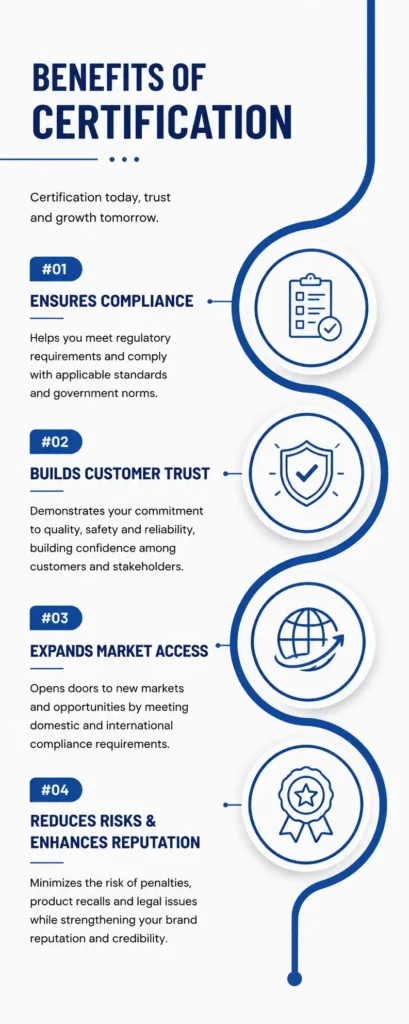
Obtaining a BEE Certificate offers significant advantages for manufacturers, importers, distributors, and consumers alike. Apart from ensuring compliance with government regulations, it helps businesses improve product credibility, increase customer trust, and strengthen their market presence. Products carrying a BEE Star Label are often preferred because they demonstrate superior energy efficiency and lower electricity consumption.
Some of the major benefits of BEE Certification include:
Compliance with Government Regulations
BEE Certification ensures that products comply with the requirements of the Energy Conservation Act, 2001 and the guidelines issued by the Bureau of Energy Efficiency. Compliance helps businesses avoid regulatory issues while legally marketing applicable products in India.
Improved Market Credibility
Displaying the official BEE Star Label enhances the reputation of a product. It assures customers that the appliance has been independently tested and meets prescribed energy efficiency standards, making it more competitive in the marketplace.
Greater Consumer Confidence
Modern consumers actively compare the energy performance of electrical appliances before making a purchase. A certified product with a higher star rating builds confidence and encourages customers to choose energy-efficient options.
Lower Energy Consumption
BEE-certified products are designed to consume less electricity while maintaining optimal performance. This helps end users reduce their monthly electricity bills and promotes responsible energy usage.
Competitive Business Advantage
Manufacturers offering energy-efficient products often gain an advantage over competitors. The BEE Star Label serves as a valuable marketing tool that differentiates products in a highly competitive market.
Contribution to Environmental Sustainability
Reducing energy consumption directly lowers carbon emissions and minimizes the overall environmental impact. By manufacturing BEE-certified products, companies actively support India’s sustainability and energy conservation initiatives.
Enhanced Brand Value
Compliance with nationally recognized energy efficiency standards strengthens a company’s reputation for quality, innovation, and environmental responsibility, leading to stronger brand recognition and long-term customer loyalty.
BEE Standard & Labelling Programme
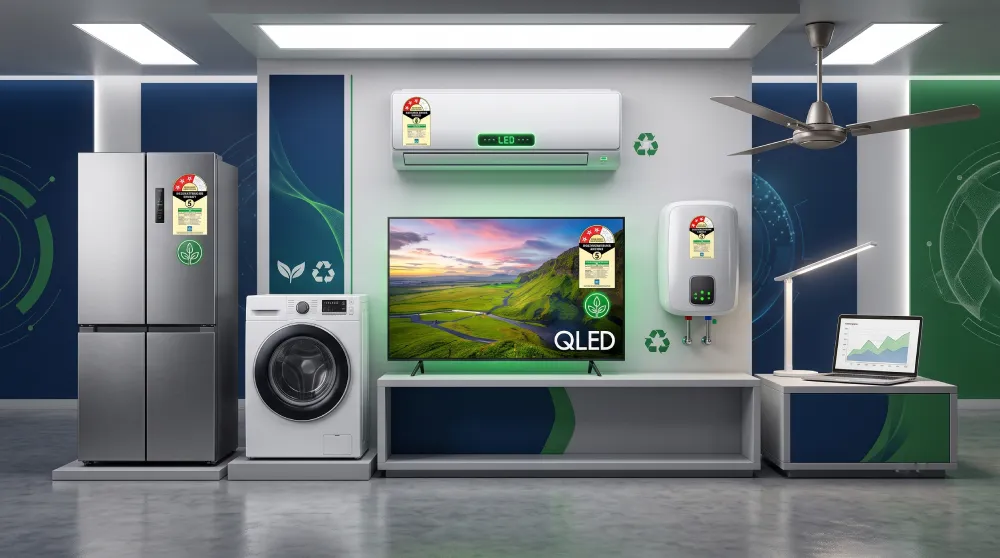
The BEE Standard and Labelling Programme was introduced by the Bureau of Energy Efficiency to encourage the use of energy-efficient electrical appliances across India. Launched under the provisions of the Energy Conservation Act, 2001, the programme enables consumers to compare products based on their energy performance through a simple and transparent star rating system.
The primary objective of this initiative is to promote informed purchasing decisions while encouraging manufacturers to produce appliances that consume less electricity without compromising performance.
Under this programme, eligible products are tested in approved laboratories to evaluate their energy efficiency. Based on the test results, BEE assigns a Star Rating ranging from 1 Star to 5 Stars, with 5 Star representing the highest level of energy efficiency.
The programme also establishes Minimum Energy Performance Standards (MEPS) for various product categories. Products that fail to meet these minimum standards cannot be sold under the applicable BEE labelling requirements. This ensures that only energy-efficient products are introduced into the Indian market.
Objectives of the BEE Star Labelling Programme
The BEE Standard and Labelling Programme has been developed with several important objectives, including:
- Promoting energy-efficient electrical appliances across India.
- Helping consumers compare products based on electricity consumption.
- Reducing overall national energy demand.
- Encouraging manufacturers to adopt advanced energy-saving technologies.
- Establishing minimum energy performance standards for eligible products.
- Increasing public awareness about energy conservation and sustainable living.
- Supporting India’s long-term environmental and climate goals.
By implementing this programme, the Bureau of Energy Efficiency continues to improve product quality, reduce energy consumption, and encourage sustainable manufacturing practices across multiple industries.
Why the BEE Star Label Matters
The BEE Star Label is more than just a compliance mark. It serves as a trusted indicator of a product’s energy efficiency and operating cost. Consumers can easily compare similar products and choose appliances that offer better performance while consuming less electricity.
For manufacturers and importers, the BEE Star Label enhances product value, strengthens customer confidence, and demonstrates compliance with India’s energy efficiency regulations. As awareness about sustainable living continues to grow, BEE-certified products are increasingly becoming the preferred choice in both residential and commercial markets.
At Bharati Global Compliances, we provide end-to-end assistance for BEE Registration, including product testing coordination, documentation, brand registration, model registration, and compliance support, ensuring a smooth and efficient certification process for manufacturers and importers.
Products Covered Under BEE Certification
The Bureau of Energy Efficiency (BEE) has introduced the Standards and Labelling Programme to improve energy efficiency across a wide range of electrical and electronic products. Depending on the product category, BEE certification may be Mandatory or Voluntary.
Under the mandatory scheme, manufacturers and importers must obtain BEE registration before selling their products in the Indian market. Under the voluntary scheme, businesses can obtain BEE certification to demonstrate superior energy performance and enhance customer confidence.
Products Covered Under Mandatory BEE Labelling
The following products require mandatory BEE Star Labelling before they can be sold in India.
| S. No. | Product Category |
|---|---|
| 1 | Frost Free (No-Frost) Refrigerators |
| 2 | Tubular Fluorescent Lamps |
| 3 | Room Air Conditioners (Split & Window ACs) |
| 4 | Cassette, Floor Standing, Ceiling & Tower Air Conditioners |
| 5 | Distribution Transformers |
| 6 | Direct Cool Refrigerators |
| 7 | Electric Storage Water Heaters (Geysers) |
| 8 | Colour Televisions |
| 9 | Variable Capacity Air Conditioners (Inverter ACs) |
| 10 | LED Lamps |
Manufacturers and importers dealing with these products must complete the BEE registration process and display the applicable Star Label before marketing their products in India.
Products Covered Under Voluntary BEE Labelling
The voluntary scheme allows manufacturers to showcase the energy efficiency of their products through the BEE Star Label. Although certification is not mandatory for these products, obtaining BEE registration improves market credibility and consumer trust.
The products currently covered under the voluntary programme include:
| S. No. | Product Category |
|---|---|
| 1 | Induction Motors |
| 2 | Agricultural Pump Sets |
| 3 | Ceiling Fans |
| 4 | LPG Stoves |
| 5 | Washing Machines |
| 6 | Diesel Engine Driven Monoset Pumps |
| 7 | Laptops & Notebook Computers |
| 8 | Electronic & Magnetic Ballasts |
| 9 | Office Equipment |
| 10 | Solid State Inverters |
| 11 | Diesel Generator Sets |
| 12 | Chillers |
| 13 | Microwave Ovens |
| 14 | Solar Water Heaters |
| 15 | Light Commercial Air Conditioners |
| 16 | Deep Freezers |
| 17 | UHD (Ultra HD) Televisions |
| 18 | Air Compressors |
| 19 | High Energy Lithium-Ion Batteries |
| 20 | Tyres |
As BEE regularly updates its product categories, manufacturers should verify the latest requirements before introducing new products into the Indian market.
Mandatory vs Voluntary BEE Certification
Understanding whether your product falls under the mandatory or voluntary scheme is the first step in the registration process.
| Mandatory BEE Certification | Voluntary BEE Certification |
|---|---|
| Required by law for specified products | Optional for eligible product categories |
| Product cannot be sold without BEE approval | Helps improve product credibility and market value |
| Star Label is mandatory | Star Label can be obtained voluntarily |
| Ensures regulatory compliance | Demonstrates commitment to energy efficiency |
| Non-compliance may attract regulatory action | Provides a competitive advantage in the market |
How to Determine Whether Your Product Requires BEE Certification
Before applying for BEE Registration, manufacturers and importers should identify whether their product falls under the mandatory or voluntary category. This can be determined by reviewing the latest notifications issued by the Bureau of Energy Efficiency.
If a product is included under the mandatory labelling programme, obtaining BEE approval is a legal requirement before manufacturing, importing, distributing, or selling the product in India. For products covered under the voluntary scheme, businesses can still benefit from certification by showcasing their commitment to energy efficiency and product quality.
At Bharati Global Compliances, our experts help manufacturers and importers identify the applicable BEE category, coordinate product testing, prepare documentation, and manage the complete BEE registration process from start to finish.
BEE Certification Process in India
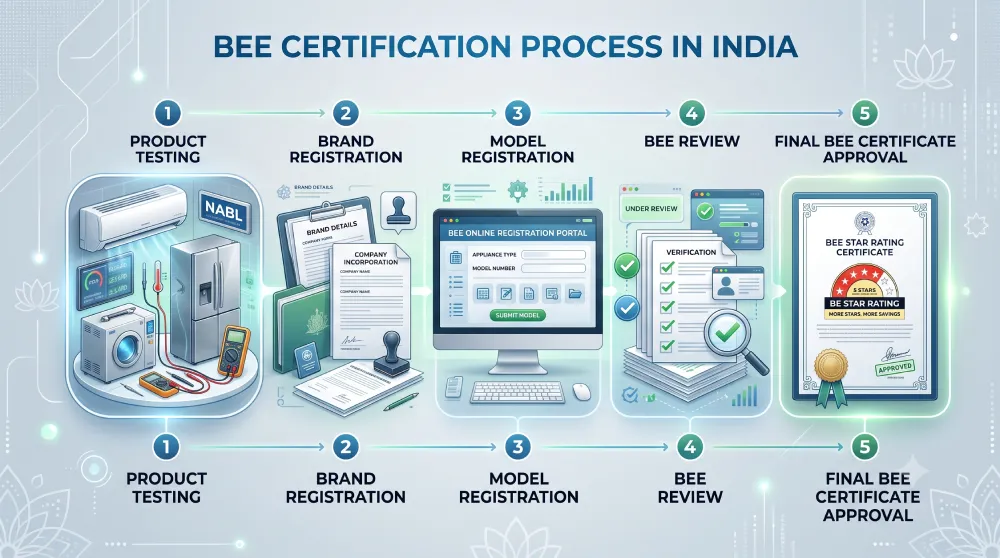
Obtaining a BEE Certificate involves a structured registration process that includes product testing, brand registration, model registration, and approval from the Bureau of Energy Efficiency (BEE). Manufacturers and importers must ensure that their products comply with the applicable energy efficiency standards before they can be marketed in India.
With proper documentation and expert guidance, the registration process can be completed smoothly and efficiently.
Step 1: Product Testing
The first and most important stage of BEE Registration is product testing. Every product model must be tested at a BEE-recognized and NABL-accredited laboratory to evaluate its energy performance and safety.
The test report generated by the laboratory forms the foundation of the BEE application and is mandatory for model registration.
Generally, the testing process includes:
Performance Testing
Performance testing measures the energy consumption and operational efficiency of the product. Based on the results, the Bureau of Energy Efficiency determines the appropriate Star Rating for the product.
Safety Testing
For products that also fall under BIS requirements, safety testing is conducted to ensure that the appliance complies with applicable safety standards and is safe for consumer use.
Documents Required for Product Testing
Applicants are generally required to submit the following documents:
- Manufacturing unit address proof
- Factory Licence
- Product User Manual
- Technical specifications of the product
- Existing BIS Licence (where applicable)
- Product sample for testing
- Additional technical documents as required by the testing laboratory
Step 2: Brand / Company Registration
Before registering individual product models, manufacturers or importers must complete Brand Registration with the Bureau of Energy Efficiency.
This registration establishes the company’s identity within the BEE portal and enables the applicant to submit model registration applications.
The Brand Registration process generally includes the following steps:
Documentation Preparation
The applicant prepares all required documents, verifies their accuracy, and completes the online registration on the BEE portal.
Application Submission
After completing the online application, the applicant submits the required documents along with the applicable registration fee. If BEE requests any clarification, the applicant must provide the necessary information within the prescribed timeline.
Document Verification
BEE officials review the submitted documents to verify their authenticity and ensure that all requirements have been fulfilled.
Login Credential Activation
Once the application is approved, BEE activates the company’s registration and provides login credentials for accessing the Model Registration portal.
Documents Required for Brand Registration
The following documents are generally required during Brand Registration:
- Cover Letter
- Company Registration Application Form
- Registration Fee Payment Receipt
- Trademark Registration Certificate
- Agreement with BEE for Use of Star Label
- ISO 9001 Certificate (where applicable)
- BIS Licence (if applicable)
- Authorized Signatory Authorization Letter
- SSI/MSME Certificate (if applicable)
- Company Seal and Authorized Signature on all submitted documents
Applicants should ensure that every document is properly signed, stamped, and uploaded with the correct validity details before submission.
Step 3: Model Registration
After Brand Registration is successfully completed, manufacturers can apply for the registration of individual product models.
Each product model must be registered separately based on its technical specifications and laboratory test results.
The Model Registration process generally involves the following stages:
Document Submission
Applicants upload all required documents, technical specifications, and supporting information for each product model through the BEE portal.
Uploading Test Reports
The NABL-accredited laboratory test report is submitted along with the application to verify the product’s energy performance.
Preparation of BEE Star Label
Based on the approved test results, the appropriate BEE Star Label is prepared for the product. This label displays the product’s energy efficiency rating and annual energy consumption details.
Application Review
BEE officials examine the application, technical documents, laboratory reports, and supporting information. If any discrepancy is found, clarification or additional documents may be requested.
Grant of Registration
After successful verification, the Bureau of Energy Efficiency approves the application and authorizes the manufacturer or importer to use the official BEE Star Label on the registered product model.
Documents Required for Model Registration
Applicants generally need the following documents while registering each product model:
- Cover Letter
- Model Registration Application Form
- Model Registration Fee Receipt
- Product Test Report issued by a NABL-accredited laboratory
- Technical Specifications
- Product Catalogue or Brochure
- BEE Star Label Artwork
- Declaration by the Authorized Signatory
- Additional supporting documents, if requested by BEE
Processing Time for BEE Registration
The overall timeline depends on factors such as laboratory testing, document verification, and application scrutiny by the Bureau of Energy Efficiency.
On average, the process includes:
- Product Testing: 2–4 weeks
- Brand Registration: 2–3 weeks
- Model Registration & Approval: 2–4 weeks
The actual timeline may vary depending on the product category, completeness of documentation, and BEE’s review process.
How Bharati Global Compliances Can Help
Navigating the BEE Registration process can be time-consuming, especially for first-time applicants. Bharati Global Compliances provides complete end-to-end support, ensuring a smooth and hassle-free certification experience.
Our BEE consultancy services include:
- Product eligibility assessment
- Documentation support
- Coordination with NABL-accredited testing laboratories
- Brand Registration assistance
- Model Registration filing
- BEE portal compliance
- Follow-up with the authorities
- End-to-end certification support until approval
With our experienced compliance professionals, manufacturers and importers can complete their BEE Registration efficiently while ensuring full compliance with the latest Bureau of Energy Efficiency guidelines.
Conclusion
Obtaining a BEE Certificate is an important step for manufacturers and importers of electrical and electronic products seeking to enter or expand in the Indian market. It confirms that a product meets the prescribed energy efficiency standards and complies with the requirements of the Bureau of Energy Efficiency (BEE) under the Energy Conservation Act, 2001.
Apart from ensuring regulatory compliance, BEE Certification enhances product credibility, strengthens consumer confidence, and improves market competitiveness. Products carrying the official BEE Star Label are widely recognized for their energy efficiency, making them a preferred choice for customers looking to reduce electricity consumption and operating costs.
Since the BEE registration process involves product testing, brand registration, model registration, and technical documentation, professional guidance can help businesses avoid delays and ensure a hassle-free approval process.
Bharati Global Compliances offers complete end-to-end consultancy for BEE Registration. Our experienced compliance professionals assist manufacturers, importers, and brand owners with product eligibility assessment, documentation, testing coordination, application filing, and approval support. We are committed to making the certification process simple, efficient, and fully compliant with the latest BEE regulations.
If you are planning to obtain a BEE Certificate for your products, our team is ready to help you at every stage of the registration process.
Frequently Asked Questions (FAQs)
What is a BEE Certificate?
A BEE Certificate is an approval issued by the Bureau of Energy Efficiency that certifies an electrical or electronic product complies with the prescribed energy efficiency standards. Certified products receive a Star Rating based on their energy performance.
Who needs BEE Registration?
Manufacturers, importers, brand owners, and authorized representatives dealing with products covered under the BEE Standards and Labelling Programme must obtain BEE Registration before selling applicable products in India.
Is BEE Certification mandatory for all products?
No. BEE Certification is mandatory only for products listed under the mandatory labelling programme. Other eligible products can be registered under the voluntary labelling scheme.
What is the BEE Star Rating?
The BEE Star Rating indicates the energy efficiency of a product on a scale of 1 Star to 5 Stars. A higher star rating represents better energy efficiency and lower electricity consumption.
How long does the BEE Registration process take?
The processing time depends on product testing, documentation, and verification by BEE. In most cases, the complete registration process takes 6 to 10 weeks, subject to the product category and application completeness.
Is product testing mandatory for BEE Registration?
Yes. Every product model must undergo testing at a BEE-recognized, NABL-accredited laboratory before applying for Model Registration.
What documents are required for BEE Registration?
Commonly required documents include:
- Company registration details
- Factory Licence
- Trademark Certificate
- Product test report
- Technical specifications
- User manual
- BIS Licence (if applicable)
- ISO Certificate (where applicable)
- Authorization letter
- Application forms and declarations
Additional documents may be required depending on the product category.
Can foreign manufacturers apply for BEE Registration?
Yes. Foreign manufacturers can obtain BEE Registration through their Authorized Indian Representative (AIR) or importer, depending on the applicable BEE requirements.
Can one BEE Registration cover multiple product models?
No. Each product model must be registered separately. However, a single Brand Registration can be used for registering multiple product models under the same brand.
Why choose Bharati Global Compliances for BEE Certification?
Bharati Global Compliances provides complete BEE Registration consultancy, including:
- Product eligibility assessment
- Documentation support
- Testing coordination
- Brand Registration
- Model Registration
- Application filing
- Compliance management
- End-to-end approval assistance
Our experienced consultants ensure a smooth, transparent, and timely certification process for manufacturers and importers across India.