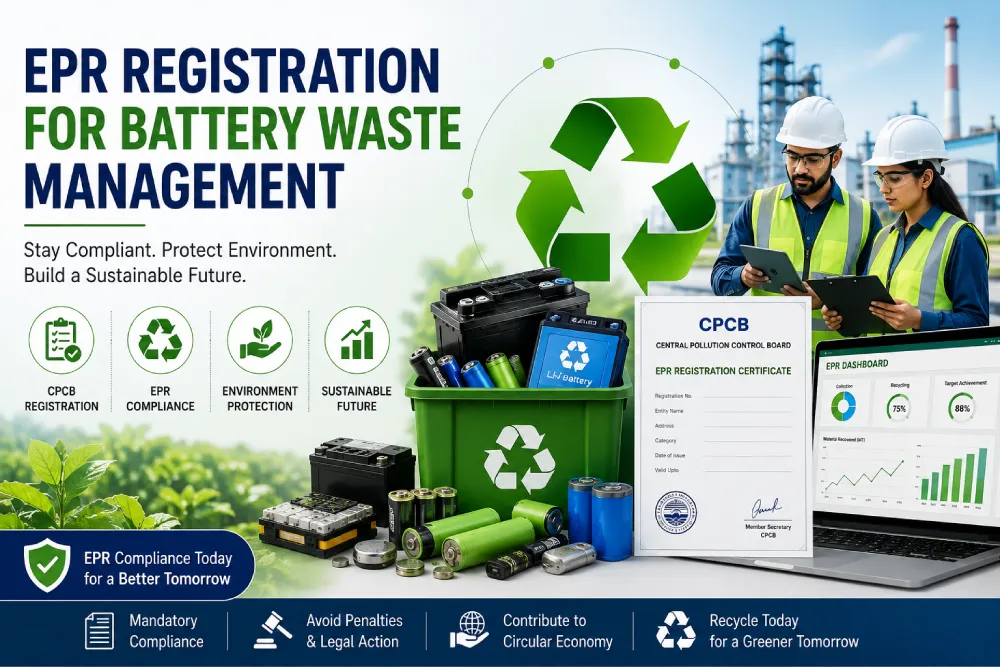
The growing adoption of portable electronics, electric vehicles, renewable energy systems, and industrial equipment has significantly increased the demand for batteries across India. From smartphones and laptops to electric vehicles and energy storage systems, batteries have become an essential part of modern life. However, the rapid increase in battery usage has also resulted in a substantial rise in battery waste, creating serious environmental and public health concerns.
Improper disposal of used batteries can release hazardous substances such as lead, lithium, cadmium, mercury, nickel, and other toxic chemicals into the environment. These materials can contaminate soil and groundwater while posing long-term risks to human health and ecosystems if they are not collected and recycled responsibly.
To address this growing challenge, the Ministry of Environment, Forest and Climate Change (MoEFCC) introduced the Battery Waste Management Rules, 2022, replacing the earlier Battery (Management and Handling) Rules, 2001. The new regulations establish a comprehensive framework for the environmentally sound collection, recycling, refurbishment, and disposal of waste batteries through the concept of Extended Producer Responsibility (EPR).
Under these rules, eligible businesses are required to obtain EPR Registration for Battery Waste Management and fulfill their responsibilities for managing batteries throughout their lifecycle.
Bharati Global Compliances provides complete consultancy services for Battery Waste EPR Registration, helping manufacturers, importers, producers, and battery-related businesses with documentation, CPCB registration, compliance planning, application filing, and post-registration support across India.
What is Battery Waste?
Battery Waste refers to batteries that have reached the end of their useful life and are no longer suitable for their intended purpose. These batteries require proper collection, storage, transportation, recycling, or refurbishment to prevent environmental pollution and recover valuable materials.
Battery waste may originate from various sectors, including:
- Household electronic devices
- Mobile phones
- Laptop computers
- Electric vehicles (EVs)
- Automotive batteries
- Industrial equipment
- Renewable energy storage systems
- Medical devices
- UPS and inverter systems
- Consumer electronics
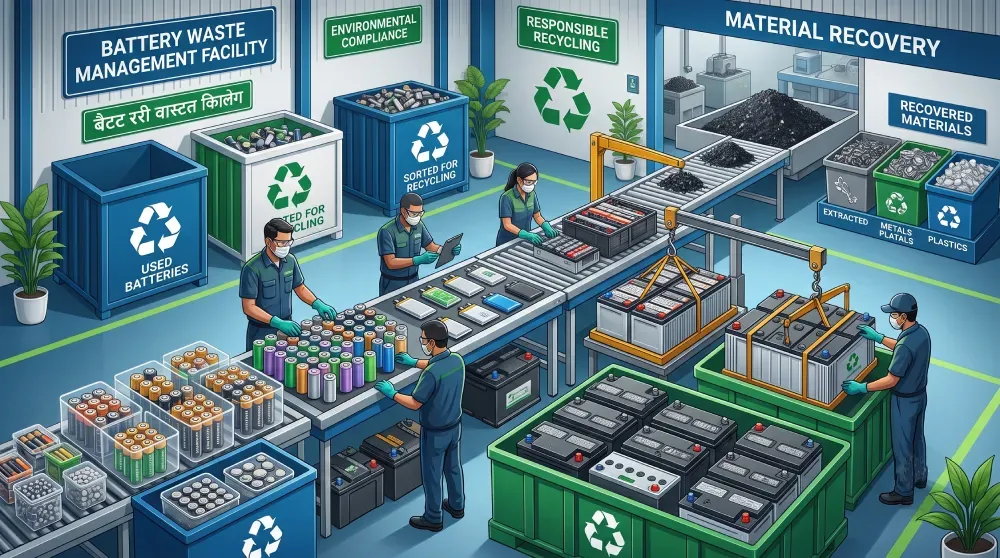
Since batteries contain valuable metals as well as hazardous substances, responsible recycling helps conserve natural resources while minimizing environmental damage.
What is EPR Registration for Battery Waste Management?
Extended Producer Responsibility (EPR) Registration for Battery Waste Management is a mandatory registration issued under the Battery Waste Management Rules, 2022 for businesses involved in manufacturing, importing, selling, or placing batteries on the Indian market.
The EPR framework makes battery producers responsible for ensuring that waste batteries generated from their products are collected, recycled, refurbished, and disposed of through authorized entities in an environmentally sound manner.
The registration process is administered through the Central Pollution Control Board (CPCB), and registered entities must fulfill prescribed recycling targets and compliance obligations.
The objective of Battery Waste EPR is to:
- Promote safe collection of waste batteries.
- Encourage recycling and material recovery.
- Reduce environmental pollution.
- Support the circular economy.
- Minimize landfill disposal.
- Ensure compliance with environmental regulations.
Battery Waste Management Rules, 2022
The Battery Waste Management Rules, 2022 were notified by the Ministry of Environment, Forest and Climate Change (MoEFCC) to establish an efficient system for the management of waste batteries throughout their lifecycle.
These rules replaced the earlier Battery (Management and Handling) Rules, 2001 and introduced a modern compliance framework based on Extended Producer Responsibility (EPR).
The rules require battery producers to register with the Central Pollution Control Board (CPCB) through the designated registration portal and fulfill their environmental responsibilities by ensuring proper collection, recycling, and refurbishment of waste batteries.
The regulations also promote the recovery of valuable materials from used batteries, reducing dependence on virgin raw materials while supporting sustainable manufacturing practices.
Objectives of Battery Waste Management Rules
The Battery Waste Management Rules have been introduced to improve the country’s battery recycling ecosystem and encourage responsible waste management.
The major objectives include:
- Environmentally sound management of waste batteries.
- Safe collection and transportation of used batteries.
- Promotion of battery recycling and refurbishment.
- Recovery of valuable materials such as lithium, nickel, cobalt, and lead.
- Reduction in hazardous waste disposal.
- Prevention of soil and groundwater contamination.
- Promotion of resource efficiency and circular economy.
- Strengthening producer accountability through Extended Producer Responsibility.
- Reducing environmental pollution caused by improper battery disposal.
- Encouraging sustainable manufacturing practices.
Why is Battery Waste EPR Registration Important?
Battery Waste EPR Registration is much more than a legal requirement. It demonstrates a company’s commitment to environmental protection and responsible waste management while ensuring compliance with Indian environmental regulations.
Some of the major benefits include:
- Ensures compliance with Battery Waste Management Rules, 2022.
- Supports environmentally responsible battery disposal.
- Promotes recycling and recovery of valuable raw materials.
- Reduces pollution caused by hazardous battery waste.
- Enhances corporate reputation and sustainability initiatives.
- Builds trust among customers and regulatory authorities.
- Supports India’s clean energy and circular economy goals.
- Minimizes the risk of regulatory penalties and non-compliance.
With expert assistance from Bharati Global Compliances, businesses can complete the Battery Waste EPR Registration process efficiently while ensuring full compliance with the latest CPCB guidelines and Battery Waste Management Rules.
Applicability of Battery Waste Management Rules, 2022
The Battery Waste Management Rules, 2022 apply to all entities involved in the manufacture, sale, import, collection, transportation, refurbishment, recycling, and disposal of batteries in India. These rules establish a comprehensive framework to ensure that waste batteries are managed in an environmentally responsible manner throughout their lifecycle.
The regulations cover every stage of battery management, from production and distribution to collection, recycling, and material recovery.
However, the rules do not apply to batteries specifically designed for equipment related to national security, defence, arms, ammunition, war materials, or space applications, where separate regulatory provisions may be applicable.
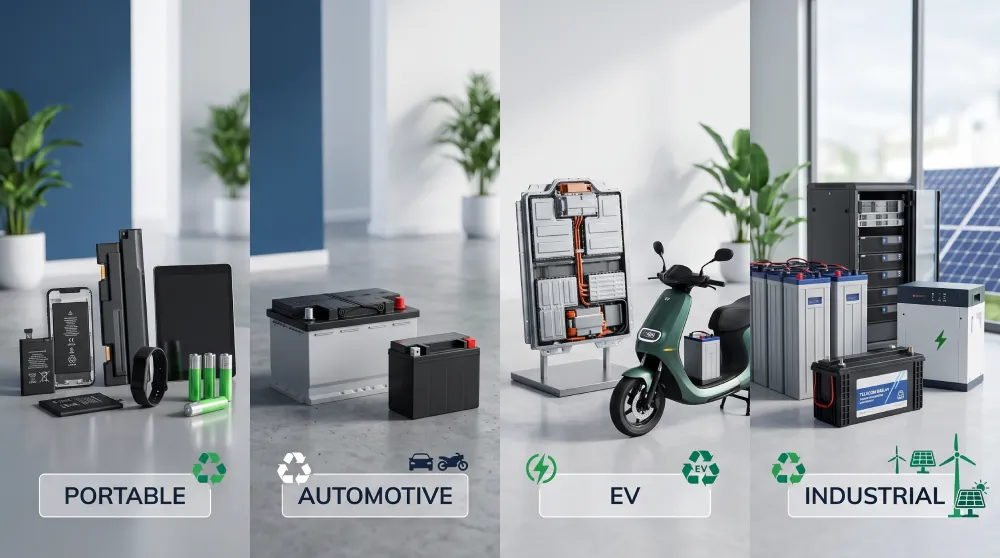
Types of Batteries Covered Under the Rules
The Battery Waste Management Rules cover almost every category of battery available in the Indian market.
The major categories include:
Portable Batteries
Portable batteries are commonly used in household and consumer electronic devices.
Examples include:
- Mobile Phone Batteries
- Laptop Batteries
- Tablet Batteries
- Camera Batteries
- Power Bank Batteries
- Remote Control Batteries
- Rechargeable AA & AAA Batteries
- Smart Watch Batteries
Automotive Batteries
These batteries are primarily used in conventional vehicles.
Examples include:
- Car Batteries
- Motorcycle Batteries
- Truck Batteries
- Bus Batteries
- Tractor Batteries
Electric Vehicle (EV) Batteries
With the rapid growth of electric mobility, EV batteries have become one of the fastest-growing battery categories.
Examples include:
- Electric Car Batteries
- Electric Scooter Batteries
- Electric Bike Batteries
- Electric Bus Batteries
- Electric Commercial Vehicle Batteries
Industrial Batteries
Industrial batteries are designed for heavy-duty commercial and industrial applications.
Common examples include:
- UPS Batteries
- Inverter Batteries
- Telecom Batteries
- Data Centre Batteries
- Solar Energy Storage Batteries
- Industrial Backup Batteries
- Forklift Batteries
Who Needs Battery Waste EPR Registration?
Battery Waste EPR Registration is mandatory for businesses involved in manufacturing, importing, branding, or placing batteries on the Indian market.
The following entities are generally required to obtain EPR Registration:
- Battery Manufacturers
- Battery Importers
- Battery Producers
- Brand Owners
- Manufacturers selling batteries under their own brand
- Businesses importing batteries with equipment
- Manufacturers of Electric Vehicle Batteries
- Portable Battery Manufacturers
- Industrial Battery Manufacturers
Every eligible business must obtain registration before carrying out applicable activities covered under the Battery Waste Management Rules.
Responsibilities of Battery Producers
The Battery Waste Management Rules assign several responsibilities to producers under the Extended Producer Responsibility (EPR) framework.
Battery producers are responsible for ensuring that waste batteries generated from their products are collected, recycled, refurbished, and processed through authorized entities.
Their major responsibilities include:
- Registering with the Central Pollution Control Board (CPCB).
- Meeting annual EPR targets.
- Establishing an effective collection mechanism for waste batteries.
- Ensuring recycling through authorized recyclers.
- Promoting refurbishment wherever feasible.
- Recovering valuable materials from used batteries.
- Maintaining records of batteries introduced into the market.
- Filing periodic returns as prescribed by the authorities.
- Complying with all provisions of the Battery Waste Management Rules, 2022.
These obligations help create a sustainable battery recycling ecosystem while reducing environmental pollution.
Registration of Refurbishers and Recyclers
Apart from producers, businesses engaged in refurbishing and recycling waste batteries must also obtain registration under the Battery Waste Management Rules.
Authorized refurbishers and recyclers are responsible for:
- Collecting waste batteries.
- Refurbishing reusable batteries.
- Recycling batteries through approved processes.
- Recovering valuable materials.
- Ensuring environmentally sound disposal of residual waste.
- Maintaining operational records.
- Submitting periodic compliance reports to the concerned authority.
Their role is essential in achieving the recycling and recovery targets prescribed under the EPR framework.
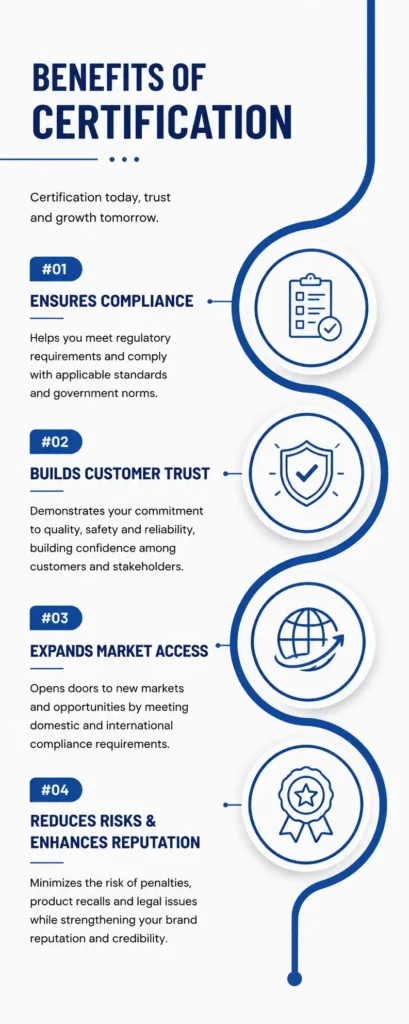
Benefits of Battery Waste EPR Registration
Obtaining Battery Waste EPR Registration offers numerous environmental, legal, and business advantages.
Regulatory Compliance
Registration ensures compliance with the Battery Waste Management Rules, 2022, helping businesses operate legally and avoid regulatory action.
Environmental Protection
Proper collection and recycling of waste batteries reduce hazardous pollution and prevent contamination of soil and water resources.
Resource Recovery
Battery recycling enables the recovery of valuable materials such as lithium, cobalt, nickel, lead, and other critical minerals, reducing dependence on virgin resources.
Improved Brand Image
Companies that actively comply with environmental regulations enhance their reputation among customers, investors, and business partners.
Sustainable Business Growth
EPR compliance supports responsible manufacturing practices and aligns businesses with India’s sustainability and circular economy initiatives.
Competitive Advantage
Many government agencies, multinational corporations, and environmentally conscious buyers prefer working with businesses that maintain strong environmental compliance standards.
How Bharati Global Compliances Can Help
Navigating Battery Waste EPR compliance requires a thorough understanding of regulatory requirements and documentation procedures. Bharati Global Compliances provides end-to-end consultancy services to simplify the registration process for manufacturers, importers, producers, and brand owners.
Our services include:
- Eligibility assessment
- CPCB registration assistance
- Documentation support
- EPR compliance planning
- Application filing
- Regulatory follow-up
- Renewal assistance
- Post-registration compliance support
With our experienced compliance professionals, your business can obtain Battery Waste EPR Registration efficiently while ensuring full compliance with the latest Battery Waste Management Rules, 2022 and CPCB guidelines.
Eligibility Criteria for Battery Waste EPR Registration
Businesses involved in the manufacture, import, branding, sale, refurbishment, or recycling of batteries must evaluate their obligations under the Battery Waste Management Rules, 2022. Eligible entities are required to obtain EPR Registration before carrying out applicable business activities in India.
The registration requirement depends on the nature of the business and its role in placing batteries on the market or managing battery waste.
The following entities are generally eligible for Battery Waste EPR Registration:
- Battery Producers
- Battery Manufacturers
- Battery Importers
- Brand Owners
- Refurbishers
- Battery Recyclers
- Entities manufacturing batteries for Electric Vehicles (EVs)
- Manufacturers of Portable, Industrial, and Automotive Batteries
Each applicant must register under the appropriate category based on its business operations.
Producer
A Producer is an individual or organization that manufactures, imports, or sells batteries under its own brand name or markets batteries manufactured by another company under its own brand.
A producer may:
- Manufacture batteries in India.
- Import batteries into India.
- Import equipment containing batteries.
- Sell batteries under its own trademark.
- Market batteries manufactured by third parties.
Under the Battery Waste Management Rules, producers are responsible for ensuring the environmentally sound collection, recycling, refurbishment, and disposal of waste batteries generated from their products.
Importer
An Importer is a business that imports batteries or products containing batteries into India for sale, distribution, or commercial use.
Importers are responsible for fulfilling the same Extended Producer Responsibility (EPR) obligations as domestic manufacturers, including ensuring that waste batteries are collected and recycled through authorized entities.
Examples include:
- Battery Importers
- Electronics Importers
- Electric Vehicle Importers
- Solar Battery Importers
- Industrial Battery Importers
Brand Owner
A Brand Owner is a company or individual that markets batteries or battery-operated products under its own registered brand, regardless of whether the batteries are manufactured by another organization.
Common examples include:
- Consumer Electronics Brands
- Mobile Phone Brands
- Laptop Manufacturers
- Electric Vehicle Brands
- Power Tool Brands
- UPS & Inverter Brands
Brand owners must comply with EPR obligations for batteries sold under their brand name.
Refurbisher
A Refurbisher is an authorized entity engaged in restoring used batteries to extend their operational life through approved refurbishment processes.
Their responsibilities generally include:
- Collecting eligible waste batteries.
- Testing and refurbishing batteries.
- Maintaining refurbishment records.
- Ensuring safe handling of battery waste.
- Submitting compliance information to the concerned authority.
Refurbishment helps reduce waste generation while maximizing the useful life of batteries.
Recycler
A Recycler is an authorized facility that processes waste batteries to recover valuable materials such as:
- Lithium
- Lead
- Nickel
- Cobalt
- Copper
- Aluminium
- Other reusable metals
Recyclers must follow environmentally sound recycling practices and comply with the applicable provisions of the Battery Waste Management Rules.
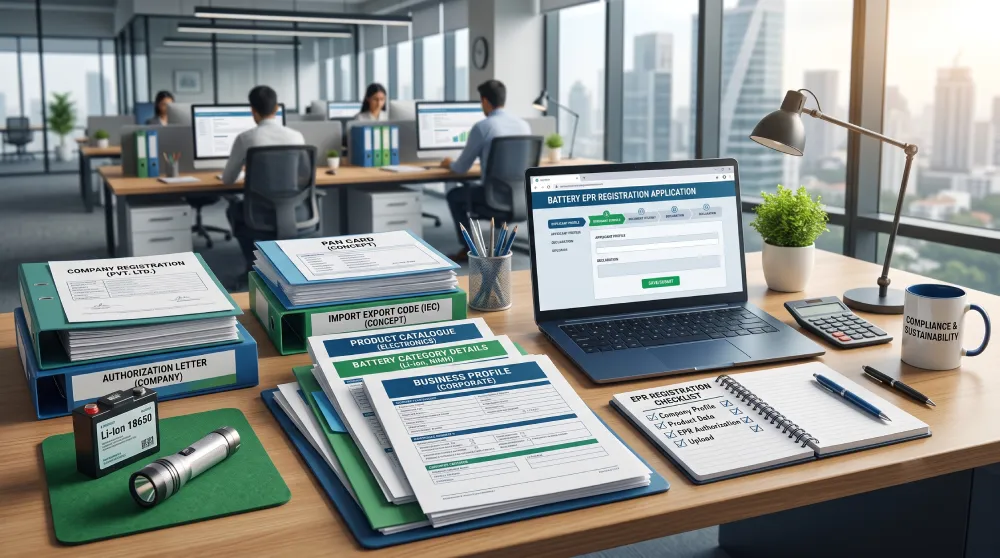
Documents Required for Battery Waste EPR Registration
Applicants should prepare all required documents before initiating the registration process. Accurate documentation helps ensure faster processing and minimizes the likelihood of delays.
The commonly required documents include:
- Certificate of Incorporation or Business Registration Certificate
- PAN Card of the Company
- GST Registration Certificate
- Import Export Code (IEC) (for Importers)
- CIN/LLP Registration Details
- Aadhaar and PAN of the Authorized Signatory
- Authorization Letter for the Authorized Signatory
- Factory or Office Address Proof
- Trademark Registration Certificate (if applicable)
- Product Catalogue or Brochure
- Details of Battery Categories
- Manufacturing or Import Details
- List of Battery Models
- Business Profile
- Covering Letter
- Any additional documents required by the CPCB
Additional documentation may be requested depending on the applicant’s business category and regulatory requirements.
Registration with the Central Pollution Control Board (CPCB)
Under the Battery Waste Management Rules, eligible producers are required to obtain registration through the Central Pollution Control Board (CPCB).
The CPCB is responsible for:
- Processing EPR Registration applications.
- Maintaining the centralized registration system.
- Monitoring EPR compliance.
- Issuing registration certificates.
- Reviewing periodic compliance submissions.
- Supervising implementation of Battery Waste Management Rules.
Businesses must ensure that all information submitted during registration is accurate and supported by valid documentation.
Ongoing Compliance Requirements
Obtaining EPR Registration is only the first step. Registered entities are also required to fulfill ongoing compliance obligations prescribed under the Battery Waste Management Rules.
These responsibilities generally include:
- Meeting annual EPR targets.
- Ensuring collection of waste batteries.
- Working with authorized recyclers and refurbishers.
- Maintaining proper records of battery sales and waste collection.
- Filing periodic returns.
- Complying with CPCB reporting requirements.
- Maintaining all supporting compliance documents.
- Following applicable environmental and safety standards.
Failure to comply with these obligations may result in regulatory action, penalties, or suspension of registration.
Why Choose Bharati Global Compliances?
Navigating Battery Waste EPR regulations requires technical expertise and careful documentation. Bharati Global Compliances offers complete consultancy services to simplify the registration process and help businesses maintain full regulatory compliance.
Our expert services include:
- Eligibility Assessment
- Documentation Support
- CPCB Registration Assistance
- Application Filing
- Compliance Planning
- Regulatory Follow-up
- Renewal Assistance
- Ongoing EPR Compliance Support
With extensive experience in environmental compliance, our team ensures a smooth, transparent, and hassle-free registration process, enabling your business to meet all obligations under the Battery Waste Management Rules, 2022.
EPR Registration Process for Battery Waste Management
Obtaining EPR Registration for Battery Waste Management involves a systematic process prescribed under the Battery Waste Management Rules, 2022. Eligible businesses must complete the registration procedure with the Central Pollution Control Board (CPCB) before manufacturing, importing, or selling batteries covered under the regulations.
A well-prepared application supported by accurate documentation helps ensure faster approval and smooth regulatory compliance.
Step 1: Assess Eligibility
The first step is to determine whether your business falls within the scope of the Battery Waste Management Rules.
Entities that generally require EPR Registration include:
- Battery Producers
- Manufacturers
- Importers
- Brand Owners
- Businesses selling batteries under their own brand
- Importers of products containing batteries
Understanding the correct registration category is essential before initiating the application.
Step 2: Prepare the Required Documents
Applicants should collect and verify all necessary documents before filing the application.
The required documents generally include:
- Company Registration Certificate
- PAN Card
- GST Registration Certificate
- Import Export Code (IEC), if applicable
- Authorized Signatory Details
- Product Catalogue
- Battery Category Details
- Manufacturing or Import Information
- Business Profile
- Supporting Compliance Documents
Proper documentation minimizes delays and helps avoid application rejection.
Step 3: Register on the CPCB Portal
Applicants must create an account on the Central Pollution Control Board (CPCB) online portal designated for Battery Waste Management.
During registration, applicants provide:
- Company Information
- Business Category
- Contact Details
- Authorized Signatory Information
- Product Details
- Operational Information
Once registration is completed, login credentials are generated for accessing the online application.
Step 4: Complete the Online Application
After obtaining portal access, applicants must complete the EPR Registration application by entering all required information.
The application generally includes:
- Business Details
- Battery Categories
- Manufacturing or Import Information
- Sales Data
- Product Details
- Compliance Declaration
- Supporting Information
Applicants should carefully verify all information before submission.
Step 5: Upload Supporting Documents
All mandatory documents must be uploaded in the prescribed format along with the application.
The regulatory authority verifies the uploaded documents during the evaluation process.
Incomplete or incorrect documentation may result in delays or requests for clarification.
Step 6: Payment of Applicable Fee
Where applicable, applicants are required to pay the prescribed registration fee through the online payment system available on the CPCB portal.
The fee structure may depend on the applicant category and applicable regulatory provisions.
Applicants should verify the latest fee schedule before submitting the application.
Step 7: Application Review by CPCB
Once the application is submitted, the Central Pollution Control Board (CPCB) reviews the information and verifies all supporting documents.
During the review process, CPCB may examine:
- Business eligibility
- Battery categories
- Product information
- Compliance declarations
- Supporting documents
- Registration details
If additional clarification or documentation is required, applicants must respond within the prescribed timeline.
Step 8: Grant of EPR Registration Certificate
After successful verification, CPCB issues the EPR Registration Certificate.
The registration authorizes the applicant to operate in compliance with the Battery Waste Management Rules, 2022.
Following registration, businesses must continue fulfilling all EPR obligations, including waste battery collection, recycling targets, reporting, and record maintenance.
Processing Time for Battery Waste EPR Registration
The registration timeline depends on document completeness, application accuracy, and CPCB verification.
The estimated processing schedule is:
- Documentation Preparation: 3–7 Working Days
- Online Application Submission: 1–2 Working Days
- CPCB Verification: 2–4 Weeks
- Registration Approval: Subject to CPCB Review
The actual timeline may vary depending on regulatory scrutiny and application complexity.
Validity of EPR Registration
Battery Waste EPR Registration remains valid for the period specified by the regulatory authority.
Registered entities must comply with all applicable obligations throughout the validity period and apply for renewal before the registration expires to ensure uninterrupted compliance.
Renewal of EPR Registration
Businesses should initiate the renewal process before the expiry of their registration.
The renewal application generally requires:
- Updated business information
- Compliance records
- Required supporting documents
- Applicable renewal fee
- Any additional information requested by CPCB
Timely renewal helps businesses continue operations without regulatory interruptions.
Suspension or Cancellation of Registration
The competent authority may suspend or cancel an EPR Registration under circumstances such as:
- Submission of false or misleading information
- Forged or invalid documents
- Non-compliance with Battery Waste Management Rules
- Failure to fulfill EPR obligations
- Non-submission of mandatory reports or returns
- Violation of applicable environmental regulations
Businesses should maintain complete transparency and fulfill all compliance requirements to avoid regulatory action.
Why Choose Bharati Global Compliances?
Obtaining Battery Waste EPR Registration requires technical knowledge, accurate documentation, and continuous regulatory compliance. Bharati Global Compliances offers comprehensive consultancy services to simplify the entire registration process for manufacturers, importers, producers, and brand owners.
Our services include:
- Eligibility Assessment
- Documentation Support
- CPCB Portal Registration
- Application Filing
- Compliance Planning
- Regulatory Follow-up
- Renewal Assistance
- Post-Registration Compliance Support
With our experienced compliance professionals, businesses can obtain Battery Waste EPR Registration efficiently while ensuring full compliance with the Battery Waste Management Rules, 2022, enabling smooth business operations across India.
Conclusion
EPR Registration for Battery Waste Management is a mandatory environmental compliance requirement for businesses involved in manufacturing, importing, branding, or placing batteries on the Indian market. The Battery Waste Management Rules, 2022 place the responsibility on producers to ensure that waste batteries are collected, recycled, refurbished, and disposed of through environmentally sound practices.
By obtaining Battery Waste EPR Registration, businesses not only comply with legal requirements but also contribute to sustainable resource management, pollution prevention, and the development of a circular economy. Proper battery recycling helps recover valuable materials such as lithium, cobalt, nickel, and lead while reducing the environmental impact of hazardous battery waste.
The registration process involves documentation, CPCB registration, compliance planning, periodic reporting, and continuous monitoring of EPR obligations. Professional guidance helps businesses complete these requirements accurately and efficiently while avoiding unnecessary delays.
Bharati Global Compliances provides comprehensive consultancy services for Battery Waste EPR Registration across India. Our experienced professionals assist manufacturers, importers, producers, and brand owners with eligibility assessment, documentation, CPCB registration, application filing, compliance management, renewal, and post-registration support, ensuring complete regulatory compliance.
If your business manufactures, imports, or markets batteries or battery-operated products in India, obtaining Battery Waste EPR Registration is an essential step toward legal compliance, environmental responsibility, and sustainable business growth.
Frequently Asked Questions (FAQs)
What is EPR Registration for Battery Waste Management?
EPR (Extended Producer Responsibility) Registration is an authorization required under the Battery Waste Management Rules, 2022, which makes producers responsible for the collection, recycling, refurbishment, and environmentally sound disposal of waste batteries.
Who is required to obtain Battery Waste EPR Registration?
The following entities generally require EPR Registration:
- Battery Manufacturers
- Battery Producers
- Battery Importers
- Brand Owners
- Manufacturers of Electric Vehicle Batteries
- Businesses importing batteries with equipment
Which authority issues Battery Waste EPR Registration?
Battery Waste EPR Registration is administered through the Central Pollution Control Board (CPCB) via its designated online registration system.
Which types of batteries are covered under the Battery Waste Management Rules?
The rules generally cover:
- Portable Batteries
- Automotive Batteries
- Electric Vehicle (EV) Batteries
- Industrial Batteries
What documents are required for Battery Waste EPR Registration?
Commonly required documents include:
- Company Registration Certificate
- PAN Card
- GST Registration Certificate
- Import Export Code (IEC), where applicable
- Authorized Signatory Documents
- Product Catalogue
- Battery Details
- Business Profile
- Supporting Compliance Documents
Additional documents may be required depending on the applicant category.
How long does the Battery Waste EPR Registration process take?
The processing time depends on document verification and CPCB approval. In most cases, the registration process is completed within 3 to 6 weeks, subject to application completeness and regulatory review.
What are the benefits of Battery Waste EPR Registration?
Key benefits include:
- Compliance with Battery Waste Management Rules
- Environmentally responsible battery disposal
- Recovery of valuable raw materials
- Improved corporate reputation
- Reduced environmental pollution
- Sustainable resource management
- Better business credibility
- Reduced regulatory risk
What happens if a business fails to obtain EPR Registration?
Failure to comply with the Battery Waste Management Rules may result in regulatory action, penalties, environmental compensation, suspension of business activities, or other enforcement measures under applicable environmental laws.
Can foreign manufacturers obtain Battery Waste EPR Registration?
Yes. Foreign manufacturers supplying batteries or battery-operated products to the Indian market can comply with Indian EPR requirements through the applicable registration mechanism and authorized business arrangements as prescribed by the Battery Waste Management Rules.
Why choose Bharati Global Compliances for Battery Waste EPR Registration?
- CPCB Registration Assistance
- Application Filing
- Compliance Planning
- Renewal Assistance
- Regulatory Follow-up
- Post-Registration Compliance Support
Our experienced consultants ensure a smooth, transparent, and timely registration process while helping your business maintain full compliance with the latest Battery Waste Management Rules.