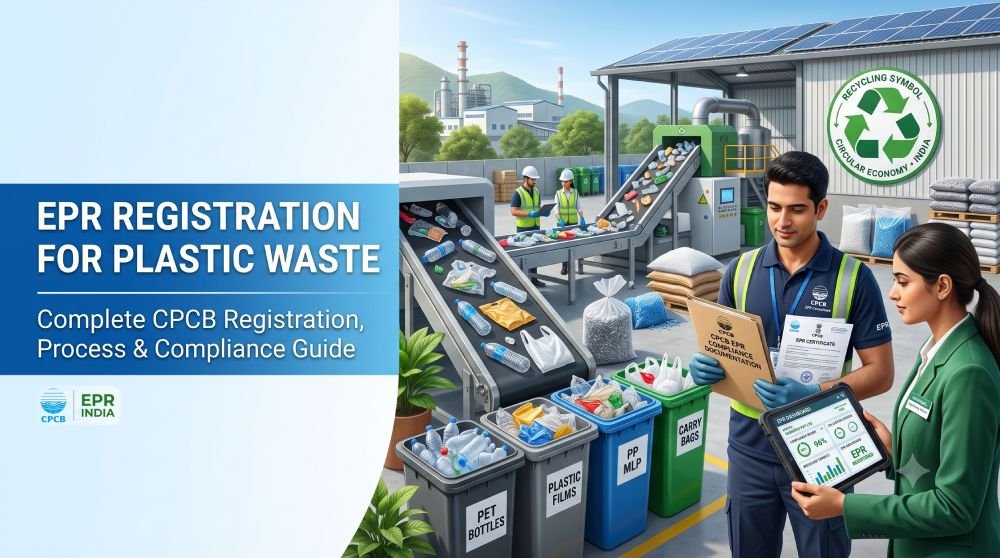
Plastic has become an indispensable material in modern life due to its affordability, durability, and versatility. It is extensively used in packaging, consumer goods, healthcare, agriculture, logistics, and numerous industrial applications. However, the rapid increase in plastic consumption has also resulted in a significant rise in plastic waste, creating serious environmental challenges across India.
Improper disposal of plastic waste contributes to land pollution, water contamination, clogged drainage systems, and harm to wildlife and marine ecosystems. Since most plastic materials take hundreds of years to decompose, effective waste management has become a national priority.
To address this issue, the Government of India introduced the Extended Producer Responsibility (EPR) framework under the Plastic Waste Management Rules, 2016, along with subsequent amendments. The regulations require Producers, Importers, and Brand Owners (PIBOs) to take responsibility for the collection, recycling, reuse, and environmentally sound disposal of the plastic packaging they introduce into the market.
Businesses dealing with plastic packaging are required to obtain EPR Registration through the appropriate regulatory authority before commencing applicable operations. Compliance with these regulations not only fulfills legal obligations but also supports sustainable waste management and environmental protection.
Bharati Global Compliances provides comprehensive consultancy services for EPR Registration for Plastic Waste Management, assisting businesses with documentation, CPCB/SPCB registration, compliance planning, application filing, and end-to-end regulatory support across India.
What is Plastic Waste?
Plastic waste refers to discarded plastic materials generated after their intended use. It includes plastic packaging, carry bags, bottles, containers, wrappers, films, pouches, and various industrial and commercial plastic products that are no longer useful.
Plastic waste is generated from multiple sources, including:
- Household packaging waste
- Food and beverage containers
- Plastic bottles and jars
- Shopping bags
- Industrial packaging materials
- Pharmaceutical packaging
- Cosmetic packaging
- E-commerce packaging
- Agricultural plastic products
- Consumer goods packaging
When plastic waste is not collected and processed properly, it accumulates in landfills, rivers, oceans, and open spaces, causing long-term environmental damage. Effective recycling and scientific waste management play a vital role in reducing plastic pollution and conserving natural resources.
What is EPR Registration for Plastic Waste Management?
Extended Producer Responsibility (EPR) Registration for Plastic Waste Management is a mandatory authorization for businesses that introduce plastic packaging into the Indian market. The registration is governed by the Plastic Waste Management Rules and administered through the Central Pollution Control Board (CPCB) and the respective State Pollution Control Boards (SPCBs)/Pollution Control Committees (PCCs), depending on the applicant’s operational jurisdiction.
Under the EPR framework, Producers, Importers, Brand Owners, and Plastic Waste Processors are responsible for ensuring that the plastic packaging generated from their products is collected, recycled, reused, or disposed of in an environmentally sound manner through authorized waste processing facilities.
The objective of EPR Registration is to reduce plastic pollution, improve recycling rates, promote the reuse of plastic materials, and encourage businesses to adopt sustainable packaging practices.
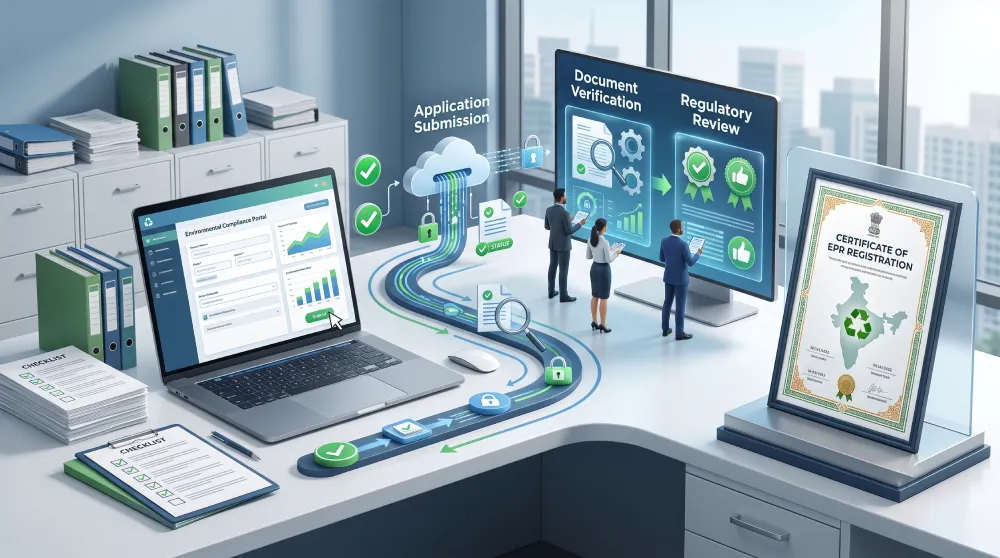
Objectives of EPR for Plastic Waste
The Extended Producer Responsibility framework has been introduced to establish a structured system for plastic waste management while encouraging responsible manufacturing and consumption practices.
The primary objectives include:
- Promoting environmentally sound management of plastic waste.
- Increasing the collection and recycling of plastic packaging.
- Reducing plastic pollution across the country.
- Encouraging the use of recycled plastic materials.
- Supporting the development of a circular economy.
- Reducing dependence on virgin plastic resources.
- Ensuring compliance with Plastic Waste Management Rules.
- Promoting sustainable business practices and environmental responsibility.
Through these objectives, the Government aims to create an efficient plastic waste management ecosystem involving manufacturers, importers, brand owners, recyclers, and consumers.
Who Needs EPR Registration?
EPR Registration is mandatory for businesses that manufacture, import, sell, or process plastic packaging covered under the Plastic Waste Management Rules.
The following entities are generally required to obtain EPR Registration:
- Producers of plastic packaging materials
- Importers of plastic packaging and packaged products
- Brand Owners marketing products in plastic packaging
- Manufacturers using plastic packaging for their products
- Plastic Waste Processors (PWPs)
- Plastic Recyclers
- Waste-to-Energy Operators
- Waste-to-Oil Processing Units
- Industrial Composting Facilities handling eligible plastic waste
Businesses operating across multiple states may be required to register with the Central Pollution Control Board (CPCB), while those operating within one or two States/Union Territories may fall under the jurisdiction of the respective State Pollution Control Boards (SPCBs) or Pollution Control Committees (PCCs), as prescribed under the applicable regulations.
Obtaining EPR Registration is not merely a legal requirement—it demonstrates an organization’s commitment to responsible waste management, environmental sustainability, and regulatory compliance. With the expert assistance of Bharati Global Compliances, businesses can complete the EPR Registration process efficiently while ensuring full compliance with the latest Plastic Waste Management Rules.
Under the Plastic Waste Management Rules, Producers, Importers, and Brand Owners (PIBOs) are responsible for ensuring that the plastic packaging they introduce into the market is collected, recycled, reused, or disposed of in an environmentally sound manner. These responsibilities form the foundation of the Extended Producer Responsibility (EPR) framework and are intended to reduce plastic pollution while promoting sustainable waste management practices.
To remain compliant with the applicable regulations, PIBOs are expected to fulfill the following obligations:
- Register on the CPCB or SPCB/PCC EPR portal, as applicable.
- Develop and submit an EPR Action Plan.
- Meet annual EPR targets for plastic waste management.
- Ensure recycling of plastic packaging through authorized Plastic Waste Processors (PWPs).
- Promote the use of recycled plastic content wherever applicable.
- Encourage reuse of eligible plastic packaging materials.
- Ensure environmentally sound end-of-life disposal of non-recyclable plastic waste.
- Maintain records of plastic packaging introduced into the market.
- Submit periodic returns and compliance reports to the regulatory authority.
- Obtain and maintain recycling certificates or plastic credits issued by authorized Plastic Waste Processors.
Even when PIBOs engage a Producer Responsibility Organisation (PRO) or another agency to manage collection and recycling activities, the legal responsibility for fulfilling EPR obligations continues to remain with the PIBO.
Plastic Waste Management Rules in India
To strengthen plastic waste management across the country, the Government of India notified the Plastic Waste Management Rules, 2016, followed by several amendments to improve accountability and encourage responsible disposal of plastic packaging waste.
A major amendment introduced the Extended Producer Responsibility (EPR) framework, making Producers, Importers, Brand Owners, and Plastic Waste Processors responsible for managing plastic packaging waste throughout its lifecycle.
The regulations establish a structured mechanism for the collection, recycling, reuse, and environmentally sound disposal of plastic waste while promoting the development of a circular economy.
Important Objectives of the Plastic Waste Management Rules
The Plastic Waste Management Rules aim to create a sustainable waste management system by assigning clear responsibilities to businesses and encouraging responsible consumption.
The primary objectives include:
- Reducing plastic pollution across the country.
- Promoting recycling and reuse of plastic materials.
- Encouraging environmentally sound disposal practices.
- Increasing the use of recycled plastic content.
- Establishing accountability for plastic packaging waste.
- Improving waste collection and recycling infrastructure.
- Supporting sustainable manufacturing practices.
- Protecting public health and the environment.
These measures help minimize the environmental impact of plastic waste while promoting efficient resource utilization.
Categories of Plastic Packaging Covered Under EPR
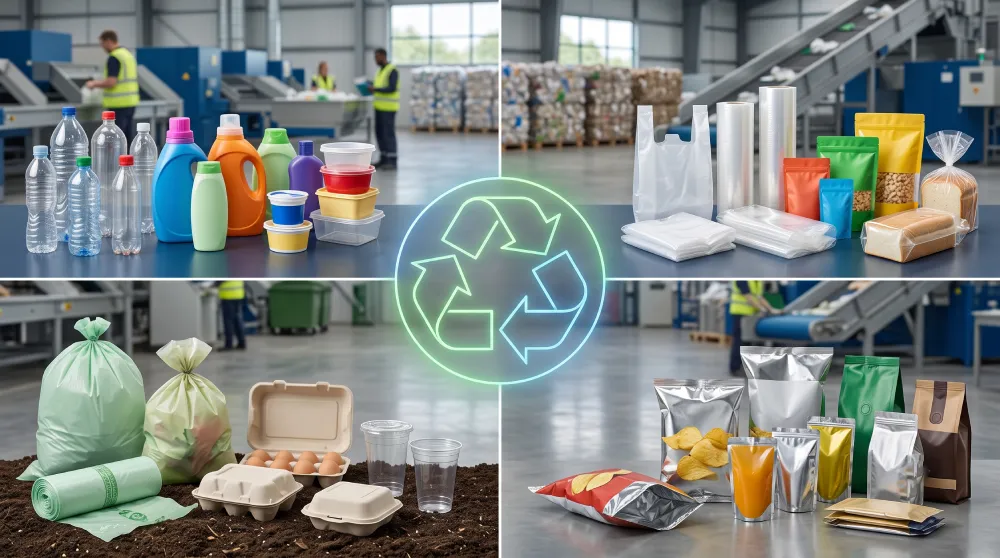
The EPR framework applies to different categories of plastic packaging introduced into the Indian market. Understanding these categories helps businesses determine their compliance obligations.
Category I – Rigid Plastic Packaging
This category includes rigid plastic products commonly used for packaging and storage.
Examples include:
- Plastic bottles
- Plastic containers
- Plastic jars
- Plastic boxes
- Plastic drums
- Rigid food packaging
Category II – Flexible Plastic Packaging
This category covers flexible plastic packaging, including both single-layer and multilayer plastic materials.
Examples include:
- Plastic carry bags
- Plastic pouches
- Plastic sachets
- Plastic wrapping films
- Plastic sheet packaging
- Flexible laminated packaging
Category III – Multi-Layered Plastic Packaging
This category includes packaging materials consisting of at least one plastic layer combined with one or more layers of non-plastic materials such as paper, aluminium, or other materials.
Examples include:
- Food packaging laminates
- Beverage cartons with plastic layers
- Multi-layer flexible packaging
- Composite packaging materials
Category IV – Compostable Plastic Packaging
This category includes certified compostable plastic products approved under the applicable standards.
Examples include:
- Compostable carry bags
- Compostable packaging films
- Compostable plastic sheets
Businesses dealing with any of these categories must evaluate their obligations under the Plastic Waste Management Rules and obtain EPR Registration where applicable.
Banned Single-Use Plastic (SUP) Items in India
To reduce plastic pollution, the Government of India has prohibited the manufacture, import, stocking, distribution, sale, and use of several Single-Use Plastic (SUP) items.
Some commonly banned items include:
- Plastic earbuds with plastic sticks
- Plastic balloon sticks
- Plastic flags
- Candy sticks
- Ice cream sticks
- Thermocol decoration items
- Plastic plates
- Plastic cups
- Plastic glasses
- Plastic cutlery such as forks, spoons, and knives
- Plastic straws
- Plastic trays
- Plastic stirrers
- Plastic wrapping films used for sweet boxes
- Plastic wrapping for invitation cards
- Plastic wrapping on cigarette packets
- Plastic or PVC banners below the prescribed thickness
Businesses should regularly review the latest government notifications to ensure that their products and packaging materials comply with the applicable restrictions.
Benefits of EPR Registration for Plastic Waste Management
Obtaining EPR Registration offers several operational, environmental, and commercial benefits for businesses dealing with plastic packaging.
Regulatory Compliance
EPR Registration ensures compliance with the Plastic Waste Management Rules and helps businesses avoid legal issues and regulatory penalties.
Stronger Brand Reputation
Companies that actively participate in responsible plastic waste management are viewed as environmentally responsible organizations, enhancing customer trust and corporate reputation.
Sustainable Business Practices
Implementing EPR obligations encourages businesses to adopt eco-friendly packaging solutions and sustainable manufacturing practices.
Better Resource Utilization
Proper recycling and reuse of plastic materials reduce dependence on virgin raw materials and support resource conservation.
Competitive Advantage
Many government organizations, multinational corporations, and environmentally conscious consumers prefer working with businesses that comply with environmental regulations and sustainability standards.
Contribution to a Circular Economy
EPR promotes the collection, recycling, and reuse of plastic materials, reducing waste generation and supporting India’s transition towards a circular economy.
By complying with EPR requirements, businesses not only meet statutory obligations but also demonstrate their commitment to environmental sustainability and responsible corporate governance. Bharati Global Compliances provides complete assistance to help businesses achieve seamless EPR compliance and obtain their Plastic Waste Management Registration efficiently.
Eligibility Criteria for EPR Registration for Plastic Waste Management
Businesses dealing with plastic packaging must determine whether they fall within the scope of the Plastic Waste Management Rules before applying for EPR Registration. The eligibility depends on the nature of the business and its role in manufacturing, importing, branding, or processing plastic packaging materials.
Entities that introduce plastic packaging into the Indian market or process plastic waste are generally required to obtain EPR Registration from the appropriate regulatory authority.
The following categories are eligible for EPR Registration:
- Producers
- Importers
- Brand Owners
- Plastic Waste Processors (PWPs)
- Plastic Recyclers
- Waste-to-Energy Plants
- Waste-to-Oil Facilities
- Industrial Composting Units
Each applicant must register under the category applicable to its business activities.
Producer
A Producer is an individual or business entity that manufactures plastic packaging materials, plastic carry bags, plastic sheets, multilayer packaging, or other plastic products used for packaging goods.
Producers are responsible for managing the plastic packaging waste generated from the products they manufacture and supply to the market. They must fulfill their EPR targets through authorized recycling and waste processing mechanisms.
Importer
An Importer is any business that imports plastic packaging materials, packaged products, raw materials, or finished goods containing plastic packaging into India.
Importers are equally responsible for ensuring that the plastic packaging introduced through imported products is collected, recycled, and processed in accordance with the Plastic Waste Management Rules.
Brand Owner
A Brand Owner is a company or individual that sells products under a registered brand name, regardless of whether the products are manufactured directly or through third-party manufacturers.
Brand owners using plastic packaging for their products must obtain EPR Registration and fulfill the prescribed obligations for plastic waste management.
Examples include:
- FMCG Companies
- Food & Beverage Brands
- Cosmetic Brands
- Pharmaceutical Companies
- E-commerce Brands
- Consumer Goods Manufacturers
Plastic Waste Processor (PWP)
A Plastic Waste Processor (PWP) is an entity authorized to process plastic waste collected under the EPR framework.
Plastic Waste Processors generally perform one or more of the following activities:
- Plastic Recycling
- Waste-to-Energy Processing
- Waste-to-Oil Conversion
- Industrial Composting
- Co-processing of Plastic Waste
PWPs play a crucial role in helping Producers, Importers, and Brand Owners achieve their EPR obligations by issuing valid recycling certificates or plastic credits for the quantity of plastic waste processed.
Regulatory Authorities for EPR Registration
The authority responsible for granting EPR Registration depends on the geographical area in which the applicant operates.
Central Pollution Control Board (CPCB)
Businesses operating in more than two States or Union Territories are generally required to obtain EPR Registration through the Central Pollution Control Board (CPCB) using the centralized online EPR portal.
CPCB is responsible for:
- Processing applications for multi-state businesses.
- Monitoring EPR compliance.
- Issuing EPR Registration Certificates.
- Managing the centralized online EPR portal.
- Maintaining national compliance records.
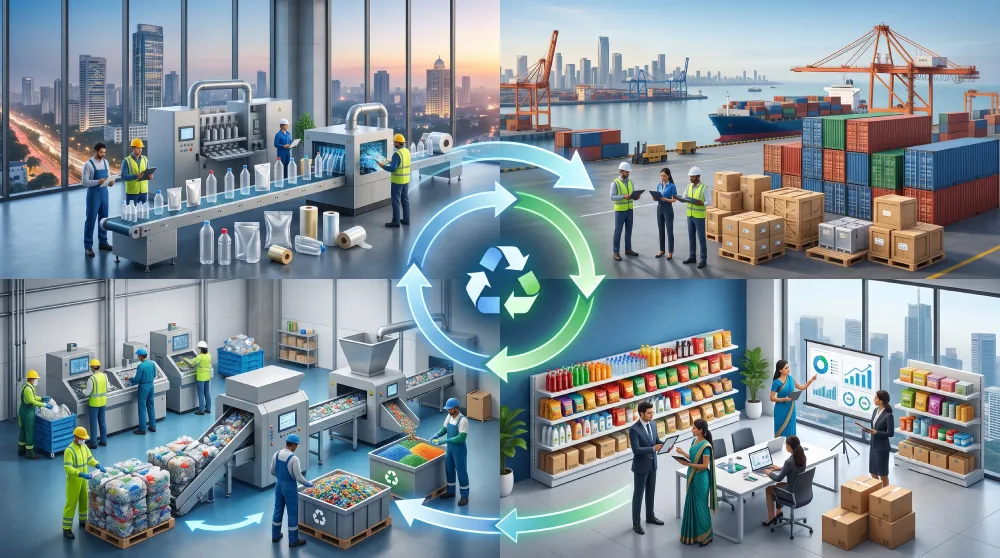
State Pollution Control Board (SPCB) / Pollution Control Committee (PCC)
Businesses operating within one or two States/Union Territories are generally required to obtain registration from the concerned State Pollution Control Board (SPCB) or Pollution Control Committee (PCC).
These authorities are responsible for:
- Processing applications within their jurisdiction.
- Verifying submitted documents.
- Monitoring local compliance.
- Issuing registration approvals where applicable.
- Conducting inspections and regulatory oversight.
Documents Required for EPR Registration
Applicants should prepare all required documents before initiating the online registration process. Accurate documentation helps reduce processing time and minimizes the chances of application rejection.
The commonly required documents include:
- Certificate of Incorporation or Business Registration Certificate
- PAN Card of the Company
- GST Registration Certificate
- Import Export Code (IEC) for Importers
- CIN/LLP Registration Details
- Aadhaar and PAN of the Authorized Signatory
- Authorization Letter for the Authorized Signatory
- Factory or Office Address Proof
- Trademark Registration Certificate (if applicable)
- Details of Plastic Packaging Categories
- Product List with Brand Names
- Product Catalogue or Brochure
- Manufacturing Process Flow Diagram (for Producers and PWPs)
- Consent to Operate issued by SPCB/PCC (where applicable)
- Geo-tagged Photographs of the Manufacturing or Processing Facility (for PWPs)
- Details of Plant and Machinery
- Agreement with Plastic Waste Processors or Recyclers (if applicable)
- Covering Letter
- Any additional supporting documents required by CPCB or SPCB/PCC
Why Proper Documentation Matters
Submitting complete and accurate documentation significantly improves the chances of faster approval. Missing information, incorrect declarations, or invalid documents may lead to application delays, requests for clarification, or rejection by the concerned authority.
At Bharati Global Compliances, our experts assist businesses in identifying the appropriate registration category, preparing accurate documentation, reviewing compliance requirements, and filing complete EPR applications with CPCB or SPCB/PCC, ensuring a smooth and hassle-free registration process.
EPR Registration Process for Plastic Waste Management
Obtaining EPR Registration for Plastic Waste Management involves a structured application process prescribed by the Central Pollution Control Board (CPCB) and the respective State Pollution Control Boards (SPCBs)/Pollution Control Committees (PCCs). Producers, Importers, Brand Owners (PIBOs), and Plastic Waste Processors (PWPs) must complete the registration process before carrying out applicable business activities in India.
By following the prescribed procedure and submitting accurate documentation, businesses can obtain EPR Registration smoothly while ensuring compliance with the Plastic Waste Management Rules.
Step 1: Prepare the Required Documents
Before initiating the online application, applicants should collect all necessary documents and verify that the information is complete and accurate.
The required documents generally include:
- Company Registration Certificate
- PAN Card
- GST Registration Certificate
- Import Export Code (IEC) for Importers
- Authorized Signatory Details
- Plastic Packaging Details
- Product Catalogue
- Manufacturing Details
- Process Flow Diagram (where applicable)
- Consent from SPCB/PCC (if applicable)
- Other supporting compliance documents
Preparing the documents in advance helps avoid delays during application processing.
Step 2: Register on the EPR Portal
The registration process begins with creating a user account on the official EPR Portal.
Applicants must provide:
- Company details
- Business category
- Contact information
- Authorized signatory details
- Operational locations
- Applicable business activities
After successful registration, login credentials are generated, allowing the applicant to access the online application dashboard.
Step 3: Complete the Online Application
Once login credentials are received, applicants can proceed with the online application.
The application generally requires:
- Business information
- Plastic packaging category
- Manufacturing or import details
- Sales information
- Plastic waste generation details
- EPR Action Plan
- Details of Plastic Waste Processors (if applicable)
Applicants should ensure that every section is completed carefully before submission.
Step 4: Upload Supporting Documents
After completing the application form, all required supporting documents must be uploaded in the prescribed format.
The uploaded documents are verified by the concerned authority during the application review process. Any discrepancy or missing information may result in queries or delays.
Step 5: Payment of Registration Fee
Applicants are required to pay the prescribed application fee through the online payment gateway available on the EPR portal.
The registration fee generally depends on:
- Plastic waste generation
- Production capacity
- Business category
- Type of applicant
The application is processed only after successful payment of the applicable fee.
Step 6: Application Review by CPCB/SPCB
After submission, the concerned authority reviews the application and verifies the uploaded documents.
The authority examines:
- Business eligibility
- Plastic packaging details
- Supporting documents
- EPR Action Plan
- Compliance declarations
- Applicable regulatory requirements
If clarification or additional documents are required, the applicant must respond within the prescribed timeframe.
Step 7: Grant of EPR Registration
After successful verification, the competent authority issues the EPR Registration Certificate.
The certificate authorizes the applicant to operate in accordance with the Plastic Waste Management Rules and fulfill all applicable Extended Producer Responsibility obligations.
Following registration, businesses must continue to maintain compliance with annual targets, reporting requirements, and recycling obligations.
Application Fees for EPR Registration
The application fee for EPR Registration varies depending on the applicant category and the quantity of plastic waste handled.
Generally, the fee is determined based on:
- Annual plastic waste generation
- Production capacity
- Type of applicant (PIBO or PWP)
- Applicable regulatory category
Applicants should refer to the latest CPCB guidelines for the applicable fee structure before submitting the application.
Validity and Renewal of EPR Registration
EPR Registration is granted for a specified validity period and must be renewed before its expiry to ensure uninterrupted compliance.
Applicants should submit the renewal application well in advance along with the prescribed documents and renewal fee.
Timely renewal helps businesses avoid compliance issues and ensures continued authorization under the Plastic Waste Management Rules.
Cancellation or Suspension of Registration
The regulatory authority may suspend or cancel an EPR Registration if:
- False or misleading information is submitted.
- Forged or invalid documents are provided.
- The applicant violates the Plastic Waste Management Rules.
- Annual EPR obligations are not fulfilled.
- Compliance reports are not submitted within the prescribed timelines.
Businesses should maintain complete transparency and comply with all regulatory requirements to avoid cancellation or suspension of their registration.
Processing Time for EPR Registration
The time required to obtain EPR Registration depends on document verification, application completeness, and review by the concerned authority.
The estimated timeline is:
- Documentation Preparation: 3–7 Working Days
- Online Application Submission: 1–2 Working Days
- Document Verification: 2–3 Weeks
- Registration Approval: Subject to CPCB/SPCB Review
The actual processing time may vary depending on the complexity of the application and the regulatory authority’s review process.
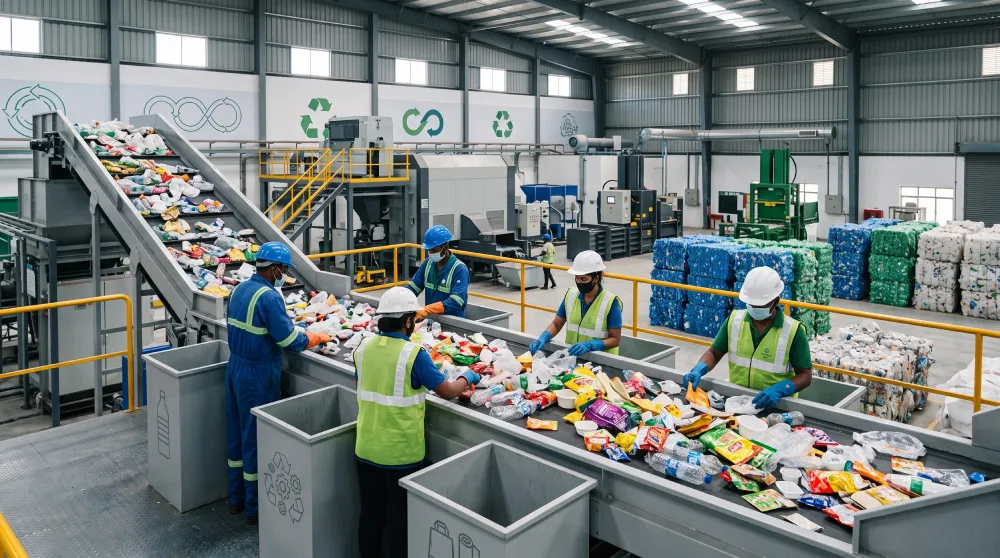
How Bharati Global Compliances Can Help
Obtaining EPR Registration can be challenging without proper guidance. Bharati Global Compliances offers complete consultancy services to help businesses navigate every stage of the registration process efficiently.
Our services include:
- Eligibility assessment
- Documentation support
- CPCB/SPCB portal registration
- EPR Action Plan preparation
- Application filing
- Compliance review
- Follow-up with authorities
- Renewal assistance
- Ongoing compliance support
Our experienced compliance professionals ensure a smooth, transparent, and hassle-free EPR Registration process, enabling your business to meet all legal obligations under the Plastic Waste Management Rules while focusing on sustainable growth.
Conclusion
EPR Registration for Plastic Waste Management is a mandatory environmental compliance requirement for Producers, Importers, Brand Owners (PIBOs) and Plastic Waste Processors (PWPs) dealing with plastic packaging in India. The registration ensures that businesses take responsibility for the collection, recycling, reuse, and environmentally sound disposal of plastic waste generated from the products they introduce into the market.
Complying with the Plastic Waste Management Rules not only helps organizations meet statutory obligations but also promotes sustainable packaging practices, resource conservation, and environmental protection. Businesses that implement an effective EPR system enhance their corporate reputation, strengthen consumer trust, and contribute to India’s vision of a circular economy.
Since the registration process involves documentation, portal registration, action plan preparation, regulatory approvals, and ongoing compliance, professional assistance can simplify the entire process and minimize delays.
Bharati Global Compliances offers complete end-to-end consultancy for EPR Registration for Plastic Waste Management. Our experienced compliance experts assist businesses with eligibility assessment, documentation, CPCB/SPCB registration, application filing, EPR compliance planning, renewal, and post-registration support, ensuring a smooth and hassle-free approval process.
Whether you are a producer, importer, brand owner, or plastic waste processor, our team is committed to helping you achieve full compliance with the latest Plastic Waste Management Rules while supporting your sustainability goals.
Frequently Asked Questions (FAQs)
What is EPR Registration for Plastic Waste Management?
EPR (Extended Producer Responsibility) Registration is an authorization that requires Producers, Importers, Brand Owners (PIBOs), and Plastic Waste Processors (PWPs) to manage the collection, recycling, reuse, and environmentally sound disposal of plastic packaging waste introduced into the Indian market.
Who is required to obtain EPR Registration?
The following entities generally require EPR Registration:
- Producers
- Importers
- Brand Owners
- Plastic Waste Processors (PWPs)
- Plastic Recyclers
- Waste-to-Energy Units
- Waste-to-Oil Facilities
- Industrial Composting Units
Which authority issues EPR Registration for Plastic Waste?
Businesses operating in multiple States or Union Territories generally register with the Central Pollution Control Board (CPCB), while businesses operating within one or two States/UTs may be required to register with the concerned State Pollution Control Board (SPCB) or Pollution Control Committee (PCC), depending on the applicable regulations.
Is EPR Registration mandatory?
Yes. EPR Registration is mandatory for eligible entities covered under the Plastic Waste Management Rules before manufacturing, importing, selling, or processing applicable plastic packaging.
What documents are required for EPR Registration?
Commonly required documents include:
- Company Registration Certificate
- PAN Card
- GST Registration Certificate
- Import Export Code (IEC) for Importers
- Authorized Signatory Documents
- Product Details
- Plastic Packaging Information
- Process Flow Diagram (where applicable)
- Consent from SPCB/PCC (if applicable)
- Supporting compliance documents
Additional documents may be required depending on the applicant category.
How long does the EPR Registration process take?
The processing time depends on document verification and approval by the concerned authority. In most cases, the registration process is completed within 3 to 6 weeks, subject to application completeness and regulatory review.
What are the benefits of EPR Registration?
Major benefits include:
- Compliance with Plastic Waste Management Rules
- Improved environmental performance
- Stronger brand reputation
- Sustainable business practices
- Better resource utilization
- Increased customer confidence
- Reduced regulatory risks
- Contribution to a circular economy
What happens if a business fails to obtain EPR Registration?
Failure to comply with EPR requirements may lead to regulatory action, environmental compensation, penalties, suspension of business activities, or other enforcement measures under the applicable environmental laws
Can foreign companies obtain EPR Registration?
Yes. Foreign manufacturers and brand owners supplying products to the Indian market can comply with EPR requirements through the applicable registration mechanism and authorized business arrangements as prescribed under the Plastic Waste Management Rules
Why choose Bharati Global Compliances for EPR Registration?
Bharati Global Compliances provides complete consultancy services for Plastic Waste EPR Registration, including:
- Eligibility Assessment
- Documentation Support
- CPCB/SPCB Registration
- EPR Action Plan Preparation
- Application Filing
- Compliance Monitoring
- Renewal Assistance
- Post-Registration Support
Our experienced consultants ensure timely registration, complete regulatory compliance, and dedicated support throughout the EPR lifecycle.