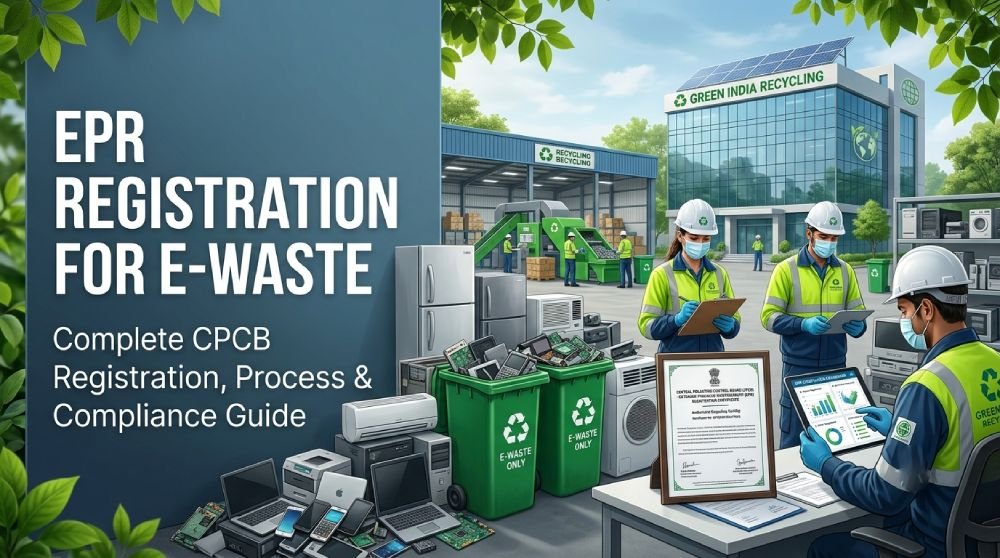
The rapid growth of technology has transformed the way we live and work. Every year, millions of new electronic products such as smartphones, laptops, televisions, refrigerators, computers, printers, and home appliances are introduced into the market. As these products reach the end of their useful life, they become electronic waste, commonly known as E-Waste.
The increasing volume of discarded electronic products has become a major environmental challenge across the world. Improper disposal of e-waste releases hazardous substances into the environment, contaminating soil, water, and air while posing serious health risks to humans and wildlife.
To address this growing concern, the Government of India has implemented Extended Producer Responsibility (EPR) under the E-Waste (Management) Rules. EPR requires producers, manufacturers, importers, and brand owners of electrical and electronic equipment to take responsibility for the environmentally sound collection, recycling, and disposal of their products after they reach the end of their lifecycle.
Obtaining EPR Registration for E-Waste is a mandatory compliance requirement for eligible businesses operating in India. It demonstrates a company’s commitment to environmental sustainability while ensuring compliance with the latest regulations issued by the Central Pollution Control Board (CPCB).
Bharati Global Compliances provides end-to-end consultancy for EPR Registration, including documentation, CPCB portal registration, compliance planning, recycler tie-ups, application filing, and post-registration support to help businesses achieve hassle-free compliance.
What is E-Waste?
E-Waste, or Electronic Waste, refers to discarded electrical and electronic equipment that is no longer functional, outdated, damaged, or has reached the end of its useful life. It includes a wide variety of products ranging from household appliances and IT equipment to consumer electronics and industrial electrical devices.
Common examples of e-waste include:
- Mobile phones and smartphones
- Laptop and desktop computers
- Televisions and LED displays
- Refrigerators and freezers
- Air conditioners
- Washing machines
- Printers and scanners
- UPS systems and inverters
- Networking devices
- Electrical cables and accessories
Many electronic products contain hazardous materials such as lead, mercury, cadmium, chromium, and brominated flame retardants. If these materials are not handled or recycled properly, they can cause severe environmental pollution and long-term health hazards. Proper collection, recycling, and scientific disposal of e-waste are therefore essential for protecting natural resources and promoting sustainable development.
What is EPR Registration for E-Waste?
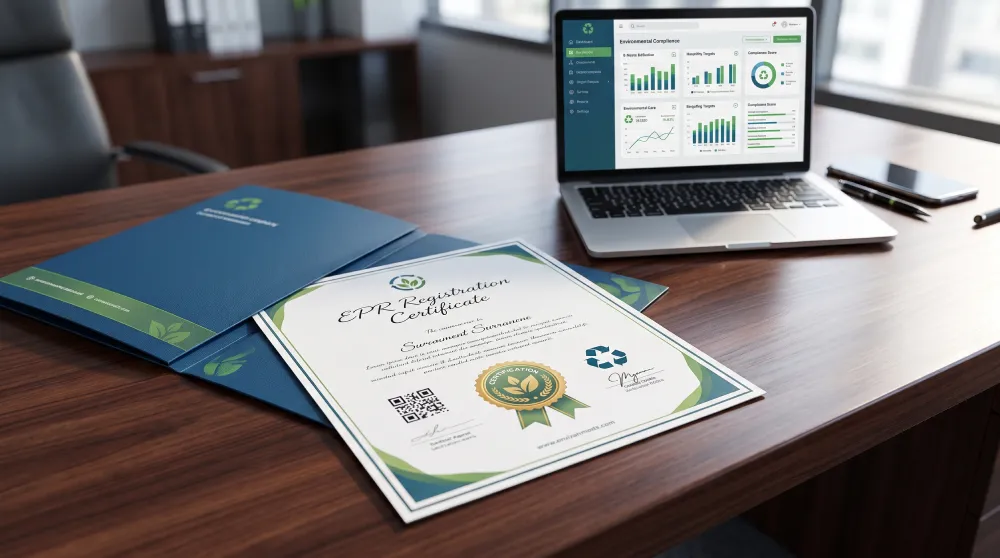
Extended Producer Responsibility (EPR) Registration is a mandatory authorization granted by the Central Pollution Control Board (CPCB) to producers, manufacturers, importers, and brand owners of electrical and electronic equipment covered under the E-Waste Management Rules.
Under the EPR framework, businesses are legally responsible for managing the end-of-life disposal of the products they introduce into the market. This includes establishing mechanisms for the collection, recycling, refurbishment, and environmentally sound disposal of electronic waste through authorized recyclers.
The primary objective of EPR Registration is to ensure that electronic waste is managed responsibly instead of being dumped in landfills or disposed of through unsafe practices. By implementing an effective EPR plan, businesses contribute to resource conservation, pollution reduction, and the development of a circular economy.
Who Needs EPR Registration?
EPR Registration is mandatory for various entities involved in the manufacture, import, sale, or distribution of electrical and electronic equipment covered under the E-Waste Management Rules.
Businesses that generally require EPR Registration include:
- Manufacturers of electrical and electronic equipment
- Producers and brand owners
- Importers of electronic products
- Online marketplace sellers selling covered electronic products
- Foreign manufacturers operating through authorized Indian representatives
- Companies introducing electrical and electronic equipment into the Indian market
Businesses falling under the applicable categories must obtain EPR Registration before commencing operations or selling covered products in India.
Why is EPR Registration Important?
EPR Registration is not just a legal obligation—it is an essential step towards responsible business practices and environmental sustainability. It ensures that electronic waste generated from products is collected, recycled, and disposed of through authorized channels, reducing its impact on the environment.
Some of the key reasons why EPR Registration is important include:
- Ensures compliance with the E-Waste (Management) Rules.
- Demonstrates environmental responsibility.
- Promotes safe collection and recycling of electronic waste.
- Helps reduce pollution caused by improper disposal.
- Conserves valuable natural resources through material recovery.
- Strengthens brand reputation and consumer trust.
- Supports India’s vision of sustainable development and a circular economy.
- Minimizes legal risks and regulatory penalties for non-compliance.
By obtaining EPR Registration, businesses not only fulfill their statutory obligations but also contribute to a cleaner environment and a more sustainable future. Bharati Global Compliances assists organizations at every stage of the EPR Registration process, ensuring complete compliance with CPCB guidelines while simplifying the documentation and approval process.
E-Waste Management in India
The increasing use of electrical and electronic equipment has led to a significant rise in electronic waste across the country. Managing this waste responsibly is essential to prevent environmental pollution and protect public health. E-Waste Management is the systematic process of collecting, storing, transporting, refurbishing, recycling, and disposing of discarded electronic products in an environmentally safe manner.
The primary objective of e-waste management is to recover valuable materials from obsolete electronic products while ensuring that hazardous substances are handled and disposed of according to environmental regulations. Effective e-waste management not only minimizes pollution but also promotes the efficient use of natural resources and supports a circular economy.
Businesses dealing with electrical and electronic equipment are encouraged to establish proper collection mechanisms, collaborate with authorized recyclers, and comply with the applicable provisions of the E-Waste (Management) Rules.
Why Proper E-Waste Management is Important
Improper disposal of electronic waste can release toxic substances into the environment, leading to serious ecological and health concerns. Responsible e-waste management offers numerous environmental, social, and economic benefits.
Some of the key advantages include:
- Prevents soil, water, and air pollution.
- Reduces the harmful effects of hazardous chemicals.
- Conserves valuable natural resources through recycling.
- Promotes the recovery and reuse of precious metals.
- Reduces dependence on raw material extraction.
- Encourages sustainable manufacturing practices.
- Supports India’s environmental protection initiatives.
- Creates a safer and healthier environment for future generations.
Adopting an effective e-waste management system enables businesses to comply with environmental regulations while demonstrating their commitment to sustainable development.
E-Waste (Management) Rules, 2022
To strengthen the country’s e-waste management framework, the Ministry of Environment, Forest and Climate Change (MoEFCC) notified the E-Waste (Management) Rules, 2022, which came into effect on 1 April 2023.
These rules introduced a digital registration and compliance system managed by the Central Pollution Control Board (CPCB). Under the new framework, entities involved in the manufacture, sale, import, refurbishment, dismantling, or recycling of electrical and electronic equipment must register on the CPCB portal under the appropriate category.
The rules aim to improve transparency, enhance traceability, and ensure that e-waste is collected and recycled only through authorized channels.
Key Provisions of the E-Waste (Management) Rules, 2022
The updated regulations place clear responsibilities on all stakeholders involved in the electronic product lifecycle.
Some of the major provisions include:
- Mandatory registration on the CPCB online portal.
- Separate registration for each applicable business category.
- Implementation of Extended Producer Responsibility (EPR) targets.
- Collection and recycling of e-waste through authorized recyclers.
- Maintenance of records related to e-waste generation and recycling.
- Submission of periodic returns and compliance reports.
- Digital monitoring of EPR obligations through the CPCB portal.
- Compliance with environmentally sound recycling and disposal practices.
Businesses that fail to register or comply with these requirements may face regulatory action as prescribed under the applicable environmental laws.
Who Must Register Under the E-Waste Rules?
Registration under the E-Waste (Management) Rules, 2022 is mandatory for entities engaged in activities involving electrical and electronic equipment covered under the notified schedules.
The following entities are generally required to register:
- Producers
- Manufacturers
- Importers
- Brand Owners
- Refurbishers
- Dismantlers
- Recyclers
If an organization performs multiple roles, it may be required to obtain registration separately under each applicable category.
Benefits of EPR Registration for E-Waste
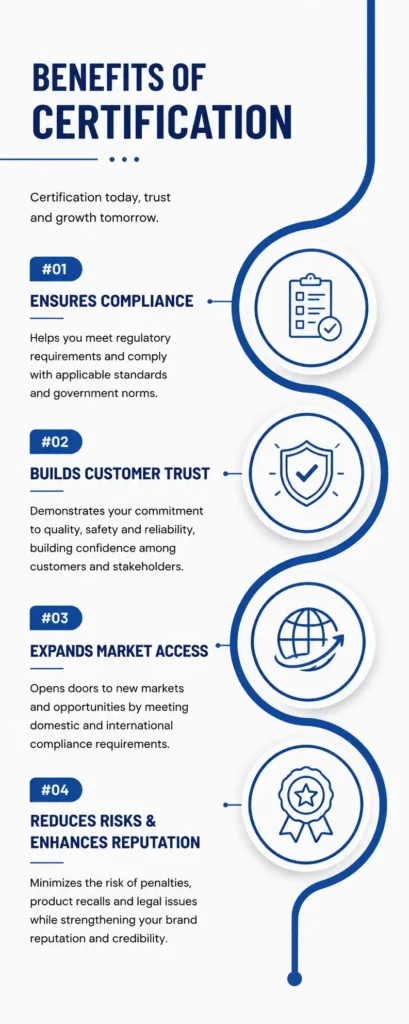
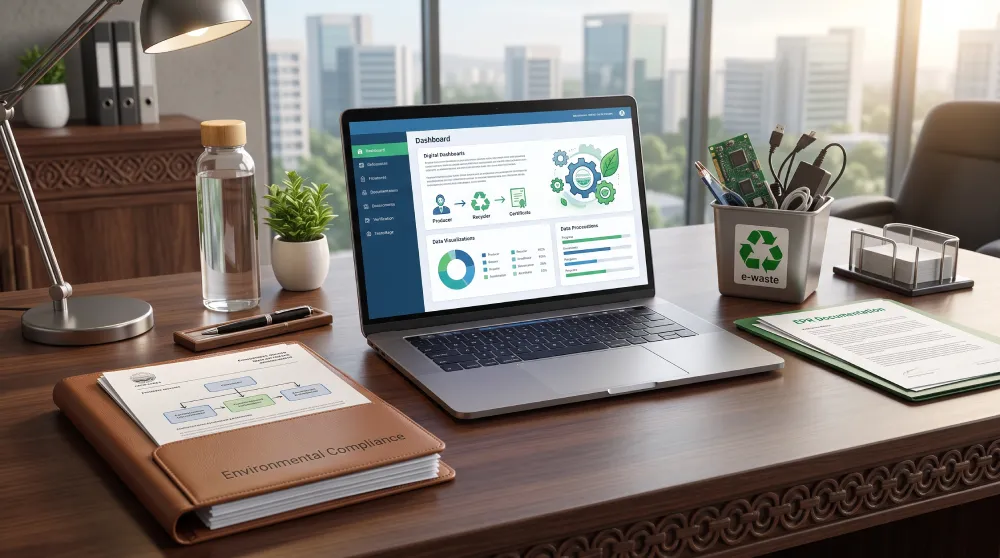
Obtaining EPR Registration provides several advantages beyond regulatory compliance. It helps businesses strengthen their environmental commitments while improving operational efficiency and brand reputation.
Legal Compliance
EPR Registration ensures compliance with the E-Waste (Management) Rules and the guidelines issued by the Central Pollution Control Board (CPCB), reducing the risk of penalties and legal complications.
Environmental Protection
Responsible collection, recycling, and disposal of electronic waste minimize environmental pollution and reduce the harmful impact of hazardous substances.
Improved Brand Reputation
Companies demonstrating responsible waste management practices are viewed more positively by customers, business partners, and regulatory authorities, helping to build long-term credibility.
Resource Conservation
Proper recycling enables the recovery of valuable materials such as copper, aluminium, gold, silver, and plastics, reducing the demand for virgin raw materials.
Sustainable Business Growth
EPR compliance supports sustainable manufacturing and contributes to India’s transition toward a circular economy, where materials are reused and recycled efficiently.
Better Market Opportunities
Many government departments, multinational corporations, and environmentally conscious buyers prefer working with businesses that comply with environmental regulations, including EPR requirements.
How Bharati Global Compliances Can Help
Navigating EPR compliance can be challenging due to evolving regulations, documentation requirements, and CPCB procedures. Bharati Global Compliances offers complete consultancy services for EPR Registration, helping businesses achieve full compliance efficiently.
Our services include:
- EPR eligibility assessment
- CPCB portal registration
- Documentation preparation
- EPR action plan support
- Authorized recycler coordination
- Application filing
- Compliance monitoring
- Post-registration assistance
With our experienced compliance professionals, manufacturers, importers, producers, and brand owners can complete the EPR Registration process smoothly while ensuring full compliance with the latest CPCB guidelines.
Products Covered Under EPR Registration for E-Waste
The E-Waste (Management) Rules, 2022 specify various categories of Electrical and Electronic Equipment (EEE) that require EPR Registration before they can be manufactured, imported, sold, or distributed in India. Producers, importers, and brand owners dealing with these products must register with the Central Pollution Control Board (CPCB) and fulfill their Extended Producer Responsibility (EPR) obligations.
The notified products are broadly classified into several categories based on their application and usage.
1. Information Technology & Telecommunication Equipment
This category includes products used for computing, communication, networking, and data processing.
Common products include:
- Desktop Computers
- Laptop Computers
- Notebook Computers
- Tablets and iPads
- Servers
- Printers
- Scanners
- Monitors
- Keyboards and Mouse
- Routers
- Modems
- Wi-Fi Devices
- Mobile Phones
- Smartphones
- Feature Phones
- Telephones
- Bluetooth Devices
- GPS Devices
- UPS Systems
- Inverters
- Data Storage Devices
- Networking Equipment
Manufacturers and importers of these products must comply with CPCB’s EPR requirements before introducing them into the Indian market.
2. Consumer Electrical & Electronic Equipment
This category covers household electrical appliances and consumer electronics that are commonly used in homes and commercial establishments.
Products include:
- LED Televisions
- Smart TVs
- Refrigerators
- Washing Machines
- Air Conditioners
- Ceiling Fans
- Microwave Ovens
- Deep Freezers
- Water Heaters
- Electric Geysers
- Audio Amplifiers
- Set-Top Boxes
- Projectors
- CCTV Cameras
- Video Recorders
- Digital Cameras
- Home Theatre Systems
- Speakers
- LED Lighting Products
- Indoor Air Purifiers
These products generate significant electronic waste after reaching the end of their lifecycle and are therefore covered under the EPR framework.
3. Large Household Appliances
Several large electrical appliances also fall under the EPR Registration requirements.
Examples include:
- Electric Cookers
- Electric Stoves
- Dishwashers
- Clothes Dryers
- Electric Heaters
- Vacuum Cleaners
- Exhaust Systems
- Commercial Refrigeration Equipment
- Industrial Cooling Appliances
- Food Processing Equipment
- Automatic Dispensers
- Electric Fans
- Steam Irons
- Garment Steamers
These appliances contain electrical components that require environmentally safe recycling and disposal.
4. Lighting Equipment
Lighting products containing electrical or electronic components are also included under the E-Waste Management Rules.
Covered products include:
- LED Bulbs
- LED Tubes
- Professional Lighting Systems
- Consumer Luminaires
- LED Drivers
- Fluorescent Lamps
- Sodium Vapour Lamps
- Metal Halide Lamps
- Commercial Lighting Equipment
Businesses dealing in these products must ensure compliance with CPCB regulations regarding collection and recycling.
5. Solar & Renewable Energy Equipment
The EPR framework also covers certain renewable energy products containing electrical components.
Examples include:
- Solar Photovoltaic (PV) Modules
- Solar Panels
- Solar Cells
Manufacturers and importers are responsible for ensuring environmentally sound disposal and recycling of these products once they reach the end of their service life.
6. Electrical & Electronic Tools
Many electrically operated industrial and commercial tools are also included within the scope of EPR Registration.
Examples include:
- Electric Drilling Machines
- Welding Equipment
- Soldering Equipment
- Riveting Machines
- Electric Gardening Tools
- Industrial Spraying Equipment
- Electric Cutting Tools
- Portable Power Tools
Proper recycling of these products helps prevent hazardous waste from entering the environment.
7. Toys, Leisure & Sports Equipment
Electrical and electronic recreational products also require EPR compliance.
Examples include:
- Video Game Consoles
- Handheld Gaming Devices
- Electronic Toys
- Electric Sports Equipment
- Coin-Operated Machines
- Electronic Fitness Equipment
Manufacturers and importers must ensure that these products are recycled through authorized channels after use.
8. Medical Devices
Medical equipment containing electrical or electronic components is also covered under the E-Waste (Management) Rules.
Some common examples include:
- MRI Machines
- CT Scanners
- PET Scanners
- Ultrasound Systems
- X-Ray Machines
- Dialysis Equipment
- Cardiology Equipment
- Laboratory Diagnostic Equipment
- Medical Monitoring Devices
- Ventilators
- Gas Analysers
Proper disposal of medical electronic equipment is essential to prevent environmental contamination and ensure public safety.
Products Covered Under EPR Registration at a Glance
The EPR framework applies to a wide range of electrical and electronic products, including:
- Information Technology Equipment
- Consumer Electronics
- Household Electrical Appliances
- Lighting Equipment
- Solar Energy Products
- Industrial Electrical Tools
- Gaming & Leisure Electronics
- Medical Electrical Equipment
- Communication Devices
- Networking Equipment
Since the list of covered products may be updated by the Central Pollution Control Board (CPCB) from time to time, businesses should regularly review the latest notifications before manufacturing or importing any electrical or electronic equipment.
At Bharati Global Compliances, we help manufacturers, importers, producers, and brand owners determine whether their products fall under the EPR Registration framework. Our experts provide complete support with product classification, documentation, CPCB registration, compliance planning, and end-to-end EPR authorization services across India.
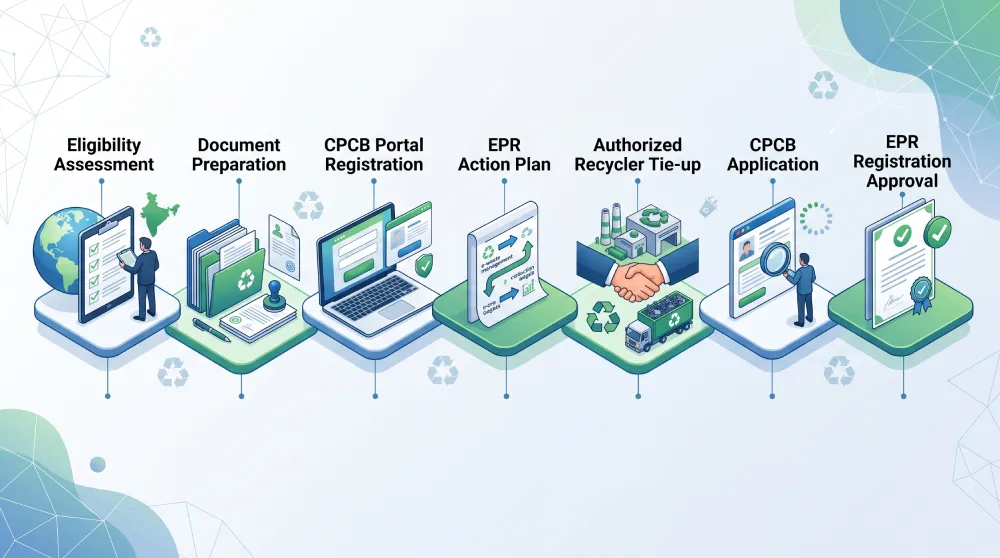
EPR Registration Process in India
Obtaining EPR Registration for E-Waste involves a systematic process prescribed by the Central Pollution Control Board (CPCB). Producers, importers, manufacturers, and brand owners must register on the CPCB portal, prepare an EPR action plan, and comply with the collection and recycling obligations specified under the E-Waste (Management) Rules, 2022.
With accurate documentation and expert guidance, businesses can complete the registration process efficiently while ensuring full regulatory compliance.
Step 1: Determine Eligibility
The first step is to determine whether your business falls under the categories covered by the E-Waste (Management) Rules.
Entities generally required to obtain EPR Registration include:
- Producers
- Manufacturers
- Importers
- Brand Owners
- Refurbishers
- Recyclers
Businesses operating under multiple categories must obtain separate registrations for each applicable category.
Step 2: Prepare the Required Documents
Before applying on the CPCB portal, applicants should collect all necessary business and product-related documents.
Proper documentation helps avoid delays during application review and verification.
Documents Required for EPR Registration
The following documents are generally required:
- Certificate of Incorporation or Company Registration Certificate
- GST Registration Certificate
- PAN Card of the Company
- Import Export Code (IEC), if applicable
- CIN/LLP Registration Details
- Authorized Signatory Authorization Letter
- Aadhaar and PAN of the Authorized Signatory
- Factory or Office Address Proof
- Product List with Brand Names
- Product Brochure or Catalogue
- Trademark Certificate (if applicable)
- Details of Electrical & Electronic Equipment (EEE)
- Sales Data of Products
- Agreement with Authorized Recycler
- EPR Action Plan
- Any additional documents required by CPCB
All documents should be complete, valid, and consistent with the information provided in the online application.
Step 3: Registration on the CPCB Portal
Applicants must create an account on the Central Pollution Control Board (CPCB) online portal under the appropriate business category.
During registration, businesses are required to provide:
- Company details
- Business category
- Product information
- Contact details
- Authorized signatory information
- Supporting documents
After successful submission, the application is forwarded to CPCB for review.
Step 4: Prepare the EPR Action Plan
One of the most important requirements for EPR Registration is the preparation of an EPR Action Plan.
The action plan generally includes:
- Estimated quantity of products introduced into the market
- Expected quantity of e-waste generation
- Collection mechanism
- Reverse logistics strategy
- Recycler partnership details
- Recycling and disposal methodology
- Compliance monitoring process
A well-prepared action plan demonstrates the applicant’s ability to fulfill its Extended Producer Responsibility obligations.
Step 5: Recycler Tie-Up
Under the E-Waste Management Rules, producers are required to ensure that collected electronic waste is recycled only through CPCB-authorized recyclers.
Applicants must establish agreements with authorized recyclers for:
- Collection of e-waste
- Transportation
- Recycling
- Environmentally sound disposal
- Issuance of recycling certificates
These arrangements form an essential part of the EPR compliance framework.
Step 6: Application Review by CPCB
After submission, CPCB officials examine the application and verify the submitted documents.
The authority may review:
- Business information
- Product categories
- EPR Action Plan
- Recycler agreements
- Supporting documents
- Compliance declarations
If additional information or clarification is required, applicants must respond within the prescribed timeline.
Step 7: Grant of EPR Registration
Once CPCB is satisfied that all requirements have been fulfilled, the authority grants EPR Registration to the applicant.
After approval, the registered entity becomes responsible for:
- Achieving prescribed EPR targets
- Maintaining records
- Coordinating with authorized recyclers
- Filing periodic returns
- Meeting all compliance obligations under the E-Waste Management Rules
Compliance After EPR Registration
Obtaining EPR Registration is only the beginning. Registered entities must continue to comply with CPCB regulations throughout their business operations.
Key post-registration responsibilities include:
- Meeting annual EPR targets
- Maintaining records of products sold
- Tracking e-waste collection and recycling
- Working only with authorized recyclers
- Filing quarterly and annual returns
- Updating business information on the CPCB portal whenever required
- Maintaining compliance with the latest E-Waste Management Rules
Failure to comply with these obligations may result in regulatory action or environmental compensation as per the applicable provisions.
Processing Time for EPR Registration
The timeline for obtaining EPR Registration depends on the completeness of documentation, application review, and CPCB verification.
Generally, the process may take:
- Document Preparation: 3–7 Working Days
- CPCB Portal Registration: 2–5 Working Days
- Application Review & Verification: 2–4 Weeks
- Grant of EPR Registration: Subject to CPCB Approval
The actual processing time may vary depending on the product category and regulatory requirements.
How Bharati Global Compliances Can Help
Navigating EPR compliance can be complex due to evolving environmental regulations and CPCB procedures. Bharati Global Compliances provides comprehensive consultancy services to simplify the entire registration process for manufacturers, importers, producers, and brand owners.
Our EPR consultancy services include:
- Product eligibility assessment
- CPCB portal registration
- Documentation support
- EPR Action Plan preparation
- Authorized recycler tie-ups
- Application filing and follow-up
- Compliance management
- Return filing assistance
- Ongoing post-registration support
Our experienced compliance professionals ensure a smooth, transparent, and timely EPR Registration process, helping your business remain fully compliant with the latest CPCB and E-Waste Management Rules.
Conclusion
EPR Registration for E-Waste is a mandatory environmental compliance requirement for producers, importers, manufacturers, and brand owners dealing with electrical and electronic equipment in India. It ensures that businesses take responsibility for the collection, recycling, and environmentally sound disposal of products after they reach the end of their useful life.
Complying with the E-Waste (Management) Rules, 2022 not only helps businesses meet legal obligations but also promotes sustainable manufacturing, resource conservation, and responsible waste management. Organizations that implement an effective EPR system enhance their environmental credibility, strengthen customer trust, and contribute to India’s circular economy initiatives.
Since the registration process involves documentation, CPCB portal registration, EPR planning, recycler coordination, and ongoing compliance, expert guidance can significantly reduce delays and ensure smooth approval.
Bharati Global Compliances offers complete end-to-end assistance for EPR Registration for E-Waste. Our experienced consultants help businesses with eligibility assessment, documentation, CPCB registration, application filing, compliance planning, recycler tie-ups, and post-registration support, ensuring a hassle-free compliance experience across India.
If your business manufactures, imports, or sells electrical and electronic products, obtaining EPR Registration is an essential step towards legal compliance and sustainable business growth.
Frequently Asked Questions (FAQs)
What is EPR Registration for E-Waste?
EPR (Extended Producer Responsibility) Registration is an authorization issued by the Central Pollution Control Board (CPCB) that requires producers, importers, manufacturers, and brand owners to manage the collection, recycling, and environmentally sound disposal of electronic waste generated from their products.
Who is required to obtain EPR Registration?
EPR Registration is generally mandatory for:
- Producers
- Manufacturers
- Importers
- Brand Owners
- Online Sellers
- Foreign Manufacturers operating through an Authorized Indian Representative (AIR)
The requirement depends on the product category covered under the E-Waste (Management) Rules.
Which authority issues EPR Registration?
EPR Registration for electronic waste is granted by the Central Pollution Control Board (CPCB) through its online registration portal.
Is EPR Registration mandatory in India?
Yes. Businesses dealing with notified electrical and electronic equipment must obtain EPR Registration before introducing applicable products into the Indian market
What documents are required for EPR Registration?
The commonly required documents include:
- Company Incorporation Certificate
- GST Registration
- PAN Card
- IEC Certificate (if applicable)
- Product Details
- Trademark Certificate
- Authorized Signatory Documents
- EPR Action Plan
- Agreement with Authorized Recycler
- Product Catalogue
- Sales Data
Additional documents may be required depending on the business category.
How long does the EPR Registration process take?
The processing time varies based on documentation and CPCB verification. In most cases, the registration process takes 3 to 6 weeks, subject to regulatory review.
What are the benefits of EPR Registration?
Some major benefits include:
- Compliance with environmental regulations
- Improved brand reputation
- Environmentally responsible waste management
- Resource conservation
- Reduced legal risks
- Better business opportunities
- Support for sustainable development
What happens if a business does not obtain EPR Registration?
Failure to comply with the E-Waste (Management) Rules may result in regulatory action, environmental compensation, penalties, and restrictions on manufacturing, importing, or selling applicable products in India
Can foreign manufacturers apply for EPR Registration?
Yes. Foreign manufacturers can comply with Indian EPR requirements through an Authorized Indian Representative (AIR) or other applicable arrangements under the CPCB guidelines.
Why choose Bharati Global Compliances for EPR Registration?
Bharati Global Compliances provides complete consultancy services for EPR Registration, including:
- Eligibility assessment
- Documentation support
- CPCB portal registration
- EPR Action Plan preparation
- Authorized recycler coordination
- Application filing
- Compliance monitoring
- Post-registration support
Our experienced professionals ensure a smooth, transparent, and timely registration process while helping businesses maintain full compliance with the latest CPCB regulations.