The electronics industry has transformed the way we live, work, and communicate. From smartphones and laptops to home appliances and industrial equipment, electrical and electronic products have become an integral part of our daily lives. However, this rapid technological advancement has also led to a significant increase in electronic waste (E-Waste), creating serious environmental and health concerns across the globe.
Many electrical and electronic products contain hazardous substances such as lead, mercury, cadmium, hexavalent chromium, and brominated flame retardants. When these products reach the end of their lifecycle and are disposed of improperly, the toxic substances can contaminate soil, water, and air. Long-term exposure to these materials may cause severe health issues, including neurological disorders, kidney damage, respiratory diseases, and developmental problems. In addition, the uncontrolled disposal of electronic waste has become one of the fastest-growing environmental challenges worldwide.
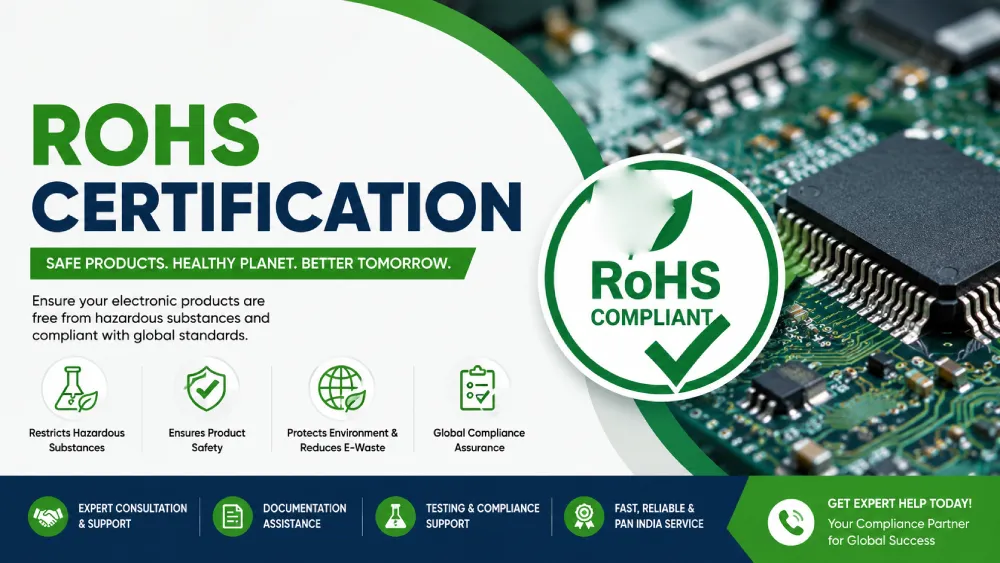
To minimize these risks, the European Union (EU) introduced the Restriction of Hazardous Substances (RoHS) Directive in February 2003. The directive officially came into force on 1 July 2006, restricting the use of specific hazardous substances in electrical and electronic equipment (EEE). Its primary objective is to protect human health, reduce environmental pollution, and encourage manufacturers to adopt safer and more sustainable production practices.
Today, RoHS compliance has become an internationally recognized requirement for manufacturers, importers, exporters, OEMs, and brand owners dealing with electrical and electronic products. Many countries and global buyers require RoHS-compliant products before allowing them to enter their markets. As a result, obtaining RoHS Certification not only ensures regulatory compliance but also enhances a company’s reputation and improves access to international business opportunities.
At Bharati Global Compliances, we provide end-to-end consultancy for RoHS Certification in India. Our experts assist businesses with documentation, technical file preparation, product testing coordination, compliance assessment, and complete certification support, making the entire process simple, efficient, and hassle-free.
What is RoHS Certification?
RoHS stands for Restriction of Hazardous Substances. It is an environmental compliance directive that regulates the use of hazardous substances in electrical and electronic equipment. The directive was developed to reduce the environmental impact of electronic products and promote the use of safer materials during manufacturing.
RoHS Certification confirms that a product complies with the prescribed limits for restricted hazardous substances. It demonstrates that the product has been manufactured using environmentally responsible materials and meets internationally accepted environmental safety standards.
The RoHS Directive works alongside the Waste Electrical and Electronic Equipment (WEEE) Directive, which focuses on the proper collection, recycling, and disposal of electronic waste. Together, these regulations encourage sustainable manufacturing practices while reducing the harmful impact of electronic products on the environment.
For businesses manufacturing or exporting electrical and electronic equipment, RoHS compliance is often an essential requirement for accessing international markets, particularly in Europe. It also helps organizations build trust with customers, distributors, and global business partners by demonstrating their commitment to product safety and environmental responsibility.
Why is RoHS Certification Important?
As environmental regulations continue to become stricter worldwide, RoHS Certification has become an essential compliance requirement for businesses involved in the electronics industry. It ensures that products are manufactured responsibly while reducing the environmental impact of hazardous substances.
RoHS Certification is important because it helps manufacturers produce safer products, minimizes environmental pollution, improves recycling efficiency, and supports sustainable manufacturing practices. Compliance with RoHS also increases consumer confidence and strengthens a company’s reputation in domestic and international markets.
Businesses that comply with RoHS standards are often preferred by international buyers, retailers, and distributors, making certification a valuable competitive advantage.
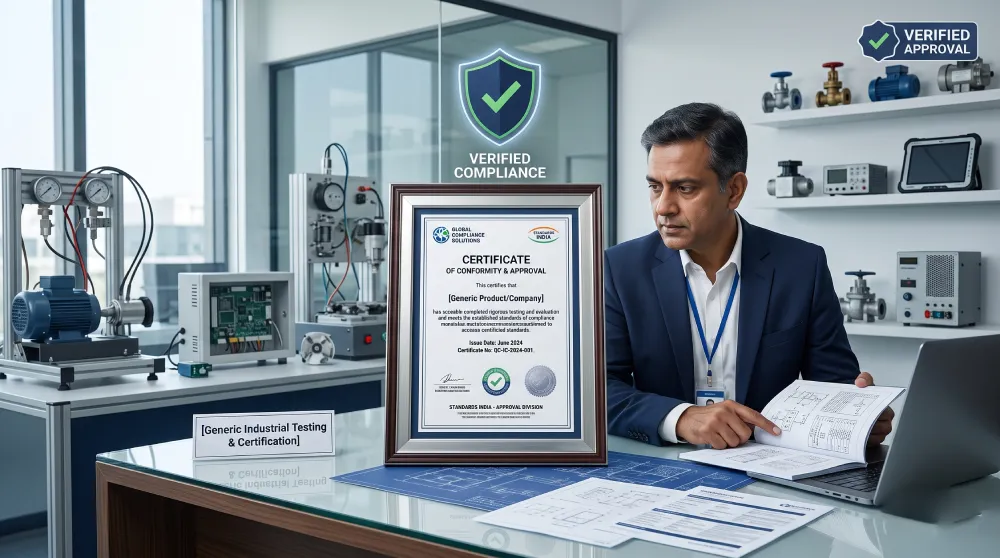
Objectives of RoHS Certification
The RoHS Directive has been introduced to achieve several important environmental and safety objectives. Its primary goal is to reduce the use of hazardous substances in electrical and electronic products while encouraging manufacturers to adopt environmentally friendly production methods.
The major objectives of RoHS Certification include:
- Restricting the use of hazardous substances in electrical and electronic equipment.
- Protecting human health from exposure to toxic chemicals.
- Reducing environmental pollution caused by electronic waste.
- Encouraging sustainable and eco-friendly manufacturing practices.
- Improving the recyclability of electronic products.
- Promoting the use of safer alternative materials.
- Supporting compliance with international environmental regulations.
- Enhancing product quality and consumer confidence.
- Facilitating international trade through globally accepted compliance standards.
Who Needs RoHS Certification?
RoHS Certification is relevant for businesses involved in the manufacturing, importing, exporting, and distribution of electrical and electronic equipment. Companies supplying products to the European Union and several other international markets are generally expected to comply with RoHS requirements.
Businesses that commonly require RoHS Certification include:
- Manufacturers of electrical and electronic products
- Importers of electronic equipment
- Exporters supplying products to international markets
- Original Equipment Manufacturers (OEMs)
- Brand owners
- Contract manufacturers
- Electronic component manufacturers
- PCB manufacturers
- LED lighting manufacturers
- Consumer electronics manufacturers
- Home appliance manufacturers
- Industrial equipment manufacturers
- Power bank and charger manufacturers
- Mobile accessory manufacturers
- Computer and laptop manufacturers
Whether you are launching a new electronic product or expanding your business into international markets, obtaining RoHS Certification demonstrates your commitment to quality, environmental responsibility, and regulatory compliance.
At Bharati Global Compliances, our experienced consultants provide complete assistance throughout the RoHS Certification process, helping businesses achieve compliance efficiently with minimal delays.
Hazardous Substances Restricted Under RoHS
The RoHS Directive restricts the use of specific hazardous substances that are commonly found in electrical and electronic equipment. These substances can cause serious health and environmental problems when products are manufactured, used, recycled, or disposed of without proper controls. Manufacturers must ensure that the concentration of these substances remains within the permissible limits prescribed under the RoHS Directive.
Lead (Pb)
Lead is widely used in soldering materials, printed circuit boards (PCBs), cables, batteries, and various electronic components. Prolonged exposure to lead can affect the nervous system, kidneys, and brain, particularly in children. RoHS restricts the use of lead to encourage safer manufacturing practices and reduce environmental contamination.
Mercury (Hg)
Mercury is commonly used in fluorescent lamps, switches, relays, and measuring instruments. It is a highly toxic metal that can contaminate water and soil, causing neurological disorders and severe health issues. Restricting mercury helps minimize environmental pollution and promotes safer electronic products.
Cadmium (Cd)
Cadmium is used in rechargeable batteries, pigments, coatings, and electrical contacts. It is one of the most hazardous heavy metals because it accumulates in the human body over time. Exposure to cadmium may result in kidney damage, bone disorders, and respiratory illnesses.
Hexavalent Chromium (Cr⁶⁺)
Hexavalent Chromium is mainly used for corrosion-resistant coatings on metal components. Although effective for preventing rust, prolonged exposure may cause skin irritation, respiratory problems, and certain types of cancer. RoHS restricts its use to improve workplace and environmental safety.
Polybrominated Biphenyls (PBB)
PBBs are brominated flame retardants used in plastic components and electronic equipment to reduce fire hazards. These substances are persistent in the environment and may negatively affect the endocrine and nervous systems. Their use is therefore restricted under the RoHS Directive.
Polybrominated Diphenyl Ethers (PBDE)
PBDEs are another group of flame retardants commonly used in cables, plastic casings, and electronic assemblies. Due to their toxic nature and long-term environmental impact, RoHS limits their use in electrical and electronic products.
Bis (2-Ethylhexyl) Phthalate (DEHP)
DEHP is a plasticizer used to make PVC materials more flexible. It is commonly found in cables, connectors, and plastic parts. Continuous exposure may affect reproductive health and child development, making it one of the restricted substances under RoHS.
Benzyl Butyl Phthalate (BBP)
BBP is used in flexible plastics, insulation materials, and industrial coatings. Scientific studies have linked BBP to reproductive and developmental health concerns, leading to its inclusion in the list of restricted substances.
Dibutyl Phthalate (DBP)
DBP is commonly used in adhesives, sealants, plastics, and printing inks. Excessive exposure may interfere with hormone function and reproductive health. Manufacturers are required to ensure that DBP levels remain within the prescribed RoHS limits.
Diisobutyl Phthalate (DIBP)
DIBP is used in polymer-based materials, adhesives, and industrial plastics. It has similar health concerns to other phthalates and is therefore regulated under the RoHS Directive to ensure safer electronic products.
Products Covered Under RoHS Certification
RoHS Certification applies to a wide range of electrical and electronic equipment. Any product that depends on electricity or electromagnetic fields for its primary operation may fall under the scope of the RoHS Directive.
Common product categories include:
- Consumer electronics
- Mobile phones and accessories
- Laptops and desktop computers
- Tablets and notebooks
- LED lights and lighting equipment
- Televisions and display panels
- Audio and video equipment
- Home appliances
- Kitchen appliances
- Smart home devices
- Power banks
- Chargers and adapters
- Printed Circuit Boards (PCBs)
- Electrical cables and wires
- Industrial control equipment
- Medical electronic devices
- Telecommunication equipment
- Networking products
- Electronic measuring instruments
- Gaming consoles
- Computer peripherals
- Surveillance systems
- IoT devices
- Electronic toys
- Solar electronic products
- Electrical switches and connectors
Manufacturers of these products are often required to demonstrate RoHS compliance before supplying them to international markets, particularly within the European Union.

Products Exempted from RoHS Certification
Although RoHS covers a broad range of electrical and electronic equipment, certain products are exempt from its requirements under specific conditions.
Some common exemptions include:
- Military and defence equipment
- National security and strategic products
- Products that do not rely on electricity as their primary source of energy
- Equipment whose main function does not require electricity
- Large-scale industrial tools covered under specific exemptions
- Certain medical and monitoring devices as permitted by applicable regulations
- Radioactive equipment
- Components used exclusively in exempted product categories
The applicability of these exemptions depends on the product type, intended use, and the latest regulatory provisions.
Scope of RoHS Certification
The scope of RoHS Certification extends beyond manufacturers and includes every business involved in the electronic product supply chain. Compliance is expected throughout the product lifecycle, from material sourcing and manufacturing to distribution and market placement.
RoHS Certification is applicable to:
- Manufacturers
- Importers
- Exporters
- Brand owners
- OEMs (Original Equipment Manufacturers)
- Contract manufacturers
- Component suppliers
- Assembly units
- Electronic product distributors
Organizations planning to expand into international markets should evaluate whether their products fall within the scope of the RoHS Directive before commencing exports.
Benefits of RoHS Certification
Obtaining RoHS Certification offers numerous commercial, environmental, and regulatory advantages for businesses.
Some of the key benefits include:
- Compliance with international environmental regulations.
- Improved access to European and global markets.
- Increased trust among customers and business partners.
- Better acceptance by international buyers and retailers.
- Reduced environmental impact through safer materials.
- Enhanced product quality and safety.
- Improved brand reputation and market credibility.
- Encouragement of sustainable manufacturing practices.
- Reduced legal and compliance risks.
- Strong competitive advantage in the global electronics industry.
RoHS compliance not only demonstrates environmental responsibility but also strengthens the long-term growth and sustainability of a business operating in the electronics sector.
Documents Required for RoHS Certification
To obtain RoHS Certification, businesses must submit various technical and compliance-related documents. These documents help demonstrate that the product has been designed and manufactured in accordance with the requirements of the RoHS Directive. The exact documentation may vary depending on the product category, manufacturing process, and applicable standards.
The commonly required documents include:
- Product description and specifications
- Product photographs
- Bill of Materials (BOM)
- Material Declaration (MD)
- Supplier Declaration of Conformity
- Component details and technical specifications
- Product design and engineering drawings
- PCB layout and assembly details (if applicable)
- Manufacturing process flow
- User manual or instruction manual
- Existing product certifications (if available)
- Quality management documents
- Risk assessment reports
- Laboratory test reports
- Declaration of Conformity (DoC)
- Technical Construction File (TCF)
Preparing accurate and complete documentation plays a crucial role in reducing certification delays and ensuring successful compliance.
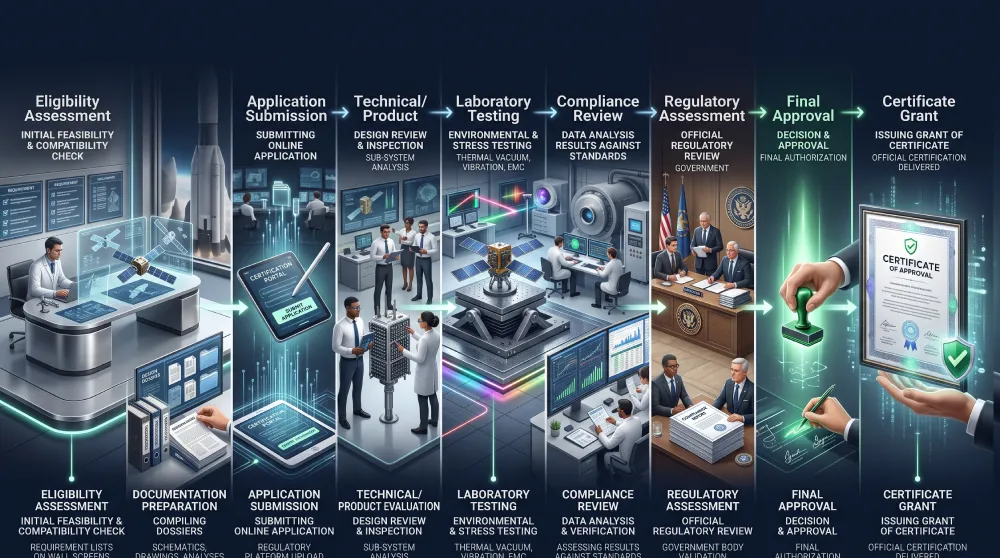
RoHS Certification Process
Obtaining RoHS Certification involves a systematic evaluation of the product, its components, manufacturing process, and supporting technical documentation. The certification process ensures that restricted hazardous substances remain within the permissible limits specified under the RoHS Directive.
Step 1: Product Assessment
The certification process begins with a detailed assessment of the product. During this stage, experts identify whether the product falls within the scope of the RoHS Directive and determine the applicable compliance requirements. The product’s materials, components, and intended application are thoroughly reviewed before proceeding further.
Step 2: Documentation Review
Once the product assessment is completed, all technical documents are carefully examined. This includes reviewing the Bill of Materials (BOM), material declarations, supplier compliance certificates, product specifications, manufacturing records, and existing test reports. Any missing or incorrect information is identified and rectified before moving to the testing stage.
Step 3: Material Declaration and Risk Assessment
Each raw material, component, and sub-assembly used in the product is evaluated to identify the possibility of restricted hazardous substances. A comprehensive material risk assessment is conducted to determine whether laboratory testing is required for specific components.
Step 4: Laboratory Testing
Product samples are tested in accredited laboratories to verify the concentration of restricted hazardous substances. Depending on the product and material composition, different testing methods may be used to ensure compliance with RoHS requirements.
Common testing methods include:
- X-Ray Fluorescence (XRF) Screening
- ICP-OES Analysis
- ICP-MS Testing
- Gas Chromatography (GC-MS)
- Wet Chemical Analysis
- Phthalate Testing
The laboratory confirms that the concentration of all restricted substances remains within the prescribed RoHS limits.
Step 5: Compliance Evaluation
After successful testing, the laboratory reports and technical documentation are evaluated together to verify that the product fully complies with the RoHS Directive. If any non-compliance is identified, corrective actions are recommended before certification can proceed.
Step 6: Preparation of Technical File
A comprehensive Technical Construction File (TCF) is prepared, containing all supporting compliance documents. This file serves as evidence that the product has been assessed and complies with the applicable RoHS requirements.
The technical file generally includes:
- Product description
- Design documents
- Material declarations
- Bill of Materials
- Laboratory test reports
- Supplier declarations
- Manufacturing records
- Risk assessments
- Compliance evaluation reports
- Declaration of Conformity
Manufacturers are expected to maintain this technical file for future inspections and regulatory audits.
Step 7: Issuance of RoHS Certificate
After the successful completion of documentation review, product testing, and compliance verification, the product is declared compliant with the RoHS Directive. The manufacturer may then issue a Declaration of Conformity (DoC) or obtain a RoHS Certificate through an authorized certification body, depending on the applicable regulatory or customer requirements.
RoHS Testing Methods
RoHS compliance is established through scientific testing methods that accurately detect the presence and concentration of hazardous substances in electronic products.
Some of the most commonly used testing methods include:
X-Ray Fluorescence (XRF)
XRF is a rapid, non-destructive screening method used to detect heavy metals such as lead, mercury, cadmium, and chromium in electronic components.
ICP-OES (Inductively Coupled Plasma Optical Emission Spectroscopy)
This analytical technique measures the concentration of metallic elements with high accuracy and is widely used for RoHS compliance testing.
ICP-MS (Inductively Coupled Plasma Mass Spectrometry)
ICP-MS is an advanced laboratory technique capable of detecting trace amounts of hazardous substances at extremely low concentrations.
Gas Chromatography-Mass Spectrometry (GC-MS)
GC-MS is commonly used for identifying and quantifying restricted phthalates present in plastic materials and polymer components.
Wet Chemical Analysis
Wet chemical testing is used to verify specific hazardous substances through chemical extraction and laboratory analysis where required.
The choice of testing method depends on the product type, material composition, and applicable compliance requirements. Proper testing ensures that products meet international safety and environmental standards before being placed on the market.
Technical File Requirements for RoHS Certification
A Technical File is one of the most important documents required for demonstrating RoHS compliance. It serves as evidence that the product has been designed, manufactured, and tested in accordance with the applicable requirements of the RoHS Directive. Regulatory authorities or customers may request this file at any time to verify product compliance.
A complete Technical File generally includes:
- Product description and intended application
- Product photographs
- Design and engineering drawings
- Bill of Materials (BOM)
- Material declarations from suppliers
- Component compliance documents
- Laboratory test reports
- Manufacturing process details
- Product specifications
- Risk assessment reports
- Quality control records
- Applicable standards and technical specifications
- Declaration of Conformity (DoC)
Maintaining an updated Technical File is essential, especially when there are changes in product design, raw materials, components, or manufacturing processes.
Timeline for RoHS Certification
The time required to obtain RoHS Certification depends on several factors, including product complexity, availability of technical documents, laboratory testing requirements, and the number of components involved.
In most cases, the certification process can be completed within:
Estimated Timeline: 2 to 4 Weeks
However, the timeline may vary depending on:
- Product category
- Number of product variants
- Availability of test reports
- Documentation readiness
- Laboratory testing duration
- Compliance corrections, if required
Businesses that maintain complete documentation and supplier declarations generally experience a faster certification process.
Validity of RoHS Certification
RoHS Certification does not have a universally fixed validity period under the Directive itself. However, the supporting technical documentation and Declaration of Conformity should remain valid as long as the product continues to comply with the applicable RoHS requirements.
Manufacturers should review and update their compliance documentation whenever there are significant changes in:
- Product design
- Product specifications
- Raw materials
- Electronic components
- Manufacturing process
- Supplier or sourcing details
- Applicable RoHS regulations
If any major modifications are made to the product, additional testing and compliance verification may be required before the product is placed on the market.
Responsibilities of Manufacturers Under RoHS
Manufacturers are responsible for ensuring that every product placed on the market complies with the applicable RoHS requirements. Compliance is not limited to product testing alone but also includes maintaining proper documentation and implementing effective quality control measures.
Key responsibilities include:
- Designing products in accordance with RoHS requirements.
- Using RoHS-compliant raw materials and components.
- Conducting necessary laboratory testing.
- Preparing and maintaining the Technical File.
- Issuing the Declaration of Conformity.
- Keeping compliance records for future inspections.
- Monitoring changes in applicable regulations.
- Taking corrective actions whenever non-compliance is identified.
By fulfilling these responsibilities, manufacturers can reduce regulatory risks and ensure uninterrupted access to international markets.
Common Challenges in RoHS Compliance
Although RoHS Certification provides several business advantages, manufacturers often face challenges during the compliance process.
Some of the most common challenges include:
Incomplete Documentation
Missing technical documents, supplier declarations, or Bills of Materials can significantly delay the certification process.
Non-Compliant Components
Sometimes, individual components supplied by vendors may contain restricted substances above the permissible limits, requiring replacement or additional testing.
Lack of Supplier Information
Obtaining accurate material declarations and compliance certificates from multiple suppliers can be a time-consuming task.
Frequent Regulatory Updates
RoHS regulations continue to evolve with new amendments and additional substance restrictions. Businesses must regularly monitor regulatory updates to maintain ongoing compliance.
Product Design Changes
Even minor changes in product design, materials, or manufacturing processes may require fresh compliance verification and additional laboratory testing.
Working with experienced compliance consultants helps businesses overcome these challenges more efficiently.
Why Choose Bharati Global Compliances for RoHS Certification?
Obtaining RoHS Certification requires technical expertise, accurate documentation, and proper coordination with testing laboratories. At Bharati Global Compliances, we simplify the entire certification process by providing end-to-end consultancy and personalized support for manufacturers, importers, exporters, and brand owners across India.
Our services include:
- Complete RoHS compliance consultancy
- Product eligibility assessment
- Documentation preparation and review
- Technical File preparation
- Laboratory testing coordination
- Supplier document verification
- Declaration of Conformity (DoC) assistance
- Compliance gap analysis
- Expert guidance throughout the certification process
- PAN India support
- Fast and transparent processing
Our experienced compliance professionals ensure that your business meets international environmental standards while minimizing delays and compliance risks. Whether you are launching a new electronic product or expanding into international markets, we help you achieve RoHS compliance with confidence and efficiency.
Frequently Asked Questions (FAQs)
What is RoHS Certification?
RoHS Certification is a compliance process that confirms electrical and electronic products meet the requirements of the Restriction of Hazardous Substances (RoHS) Directive. It ensures that products do not contain restricted hazardous substances beyond the permissible limits and are safer for both consumers and the environment.
Is RoHS Certification mandatory?
RoHS compliance is mandatory for many categories of electrical and electronic products sold in the European Union and several other international markets. If you manufacture or export products covered under the RoHS Directive, compliance is generally required before placing them on the market.
Which products require RoHS Certification?
RoHS applies to a wide range of electrical and electronic equipment, including consumer electronics, LED lighting products, home appliances, computers, laptops, mobile accessories, industrial equipment, medical devices, telecommunication products, electrical cables, and various electronic components
Which hazardous substances are restricted under RoHS?
The RoHS Directive restricts ten hazardous substances:
- Lead (Pb)
- Mercury (Hg)
- Cadmium (Cd)
- Hexavalent Chromium (Cr⁶⁺)
- Polybrominated Biphenyls (PBB)
- Polybrominated Diphenyl Ethers (PBDE)
- Bis (2-Ethylhexyl) Phthalate (DEHP)
- Benzyl Butyl Phthalate (BBP)
- Dibutyl Phthalate (DBP)
- Diisobutyl Phthalate (DIBP)
What documents are required for RoHS Certification?
The required documents generally include the product description, Bill of Materials (BOM), product specifications, technical drawings, supplier declarations, material declarations, laboratory test reports, manufacturing process details, quality records, and the Technical Construction File (TCF).
Is laboratory testing required for RoHS compliance?
Yes. Laboratory testing is one of the most important steps in the RoHS compliance process. Accredited laboratories perform various tests to verify that the concentration of restricted substances remains within the permissible limits specified under the RoHS Directive.
How long does the RoHS Certification process take?
The certification process usually takes 2 to 4 weeks, depending on the product category, documentation, laboratory testing requirements, and overall complexity of the product.
What is the validity of RoHS Certification?
RoHS compliance remains valid as long as the product design, raw materials, manufacturing process, and applicable regulatory requirements remain unchanged. Whenever significant changes occur, the product should be reassessed to ensure continued compliance.
Can imported electronic products require RoHS compliance?
Yes. Importers are responsible for ensuring that the electrical and electronic products they place on the market comply with the applicable RoHS requirements. Many importing countries require supporting compliance documentation before products can be sold.
Can Bharati Global Compliances help with RoHS Certification?
Yes. Bharati Global Compliances provides complete end-to-end assistance for RoHS Certification, including product assessment, documentation, Technical File preparation, laboratory testing coordination, compliance verification, and expert consultancy. Our team ensures a smooth certification process while helping businesses meet international regulatory requirements.
Conclusion
RoHS Certification has become an essential environmental compliance requirement for manufacturers, importers, exporters, and brand owners involved in the electrical and electronic industry. By restricting the use of hazardous substances, the RoHS Directive promotes safer products, protects human health, and supports environmentally responsible manufacturing practices.
Achieving RoHS compliance not only helps businesses meet international regulatory requirements but also strengthens their reputation, improves customer confidence, and creates new opportunities in global markets. As environmental standards continue to evolve, maintaining RoHS compliance has become a critical part of sustainable business growth and international trade.
Whether you manufacture consumer electronics, industrial equipment, LED lighting products, mobile accessories, home appliances, or other electrical products, ensuring compliance with the RoHS Directive is an investment in both product quality and long-term business success.
Bharati Global Compliances offers comprehensive RoHS Certification consultancy services across India. From documentation and Technical File preparation to laboratory testing coordination and compliance support, our experienced professionals provide end-to-end assistance to help your business achieve RoHS compliance efficiently and without unnecessary delays.
Looking for reliable support with RoHS Certification? Our compliance experts are here to guide you through every stage of the certification process.