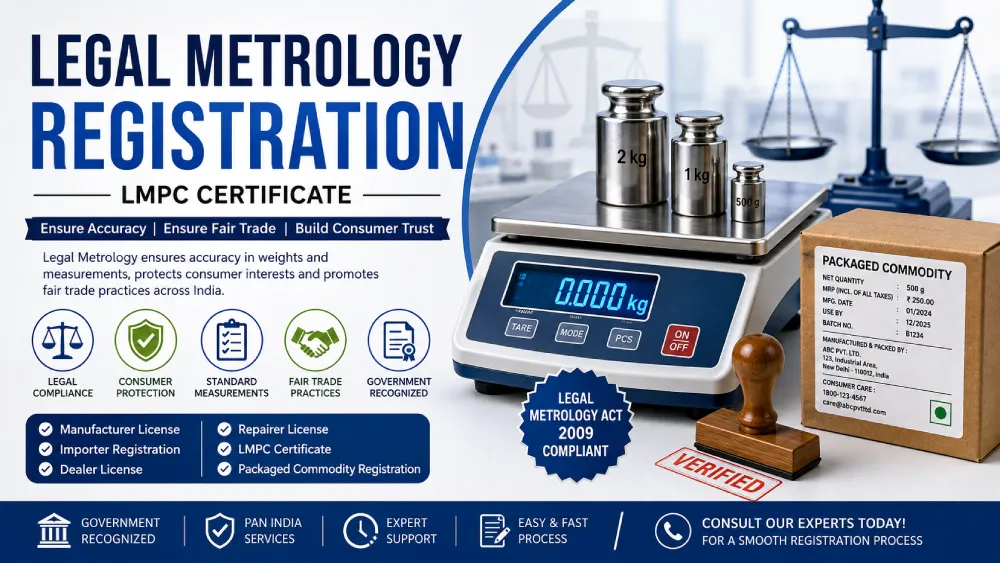
Accurate measurement is the foundation of fair trade, consumer protection, and business transparency. Whether purchasing packaged goods, fuel, medicines, or industrial equipment, consumers rely on correct weights and measurements to ensure they receive the quantity they pay for. To maintain uniform standards and prevent unfair trade practices, the Government of India regulates weighing and measuring instruments through the Legal Metrology Act, 2009 and the rules framed under it.
Legal Metrology plays a vital role in protecting the interests of consumers, manufacturers, importers, traders, and businesses by ensuring that all weighing and measuring instruments comply with prescribed standards. It also governs the labeling and packaging requirements for pre-packaged commodities sold in the Indian market.
Businesses engaged in manufacturing, importing, packaging, selling, or dealing with weighing and measuring instruments, as well as pre-packaged commodities, are required to obtain the appropriate Legal Metrology Registration or License before commencing their operations. Non-compliance may lead to penalties, seizure of goods, suspension of business activities, or legal action under the applicable provisions of the Act.
Bharati Global Compliances provides complete consultancy services for Legal Metrology Registration, LMPC Certificate, Importer Registration, Manufacturer License, Dealer License, Repairer License, and Packaged Commodity Registration, helping businesses achieve hassle-free compliance across India.
What is Legal Metrology?
Legal Metrology is the branch of metrology that deals with the regulation and control of weights, measurements, measuring instruments, and packaged commodities under legal provisions. It establishes standardized measurement systems to ensure accuracy, transparency, and fairness in commercial transactions.
In India, Legal Metrology is governed by the Legal Metrology Act, 2009, which regulates the manufacture, import, sale, distribution, repair, and use of weighing and measuring instruments. The Act also prescribes mandatory labeling requirements for packaged commodities to safeguard consumer interests and promote fair trade practices.
The primary objective of Legal Metrology is to ensure that every product sold by weight, measure, or number complies with uniform national standards and provides accurate information to consumers.
Why is Legal Metrology Important?
Legal Metrology is essential for maintaining confidence in commercial transactions and protecting both consumers and businesses. It ensures that measurements are accurate, products are correctly labeled, and businesses comply with regulatory requirements.
Some of the key reasons why Legal Metrology is important include:
- Ensures fair trade and transparent business practices.
- Protects consumers from short quantity and misleading packaging.
- Standardizes weighing and measuring instruments across India.
- Regulates packaged commodities through mandatory labeling requirements.
- Promotes consumer confidence in products and businesses.
- Supports domestic and international trade.
- Prevents unfair commercial practices and fraud.
- Encourages compliance with government regulations.
- Improves product quality and business credibility.
- Helps businesses avoid legal disputes and regulatory penalties.
Rules Under the Legal Metrology Act
The Legal Metrology Act is supported by several rules that regulate different aspects of measurement standards, packaged commodities, licensing, verification, and model approvals. Businesses must comply with the applicable rules based on the nature of their operations.
Legal Metrology (General) Rules, 2011
These rules prescribe standards for the verification, inspection, and use of various weighing and measuring instruments such as electronic weighing machines, weighbridges, fuel dispensers, water meters, thermometers, and other measuring devices.
The instruments are periodically verified and stamped by the concerned Legal Metrology authorities to ensure measurement accuracy.
Legal Metrology (Packaged Commodities) Rules, 2011
These rules regulate the labeling and sale of pre-packaged commodities in India.
Every packaged product covered under the rules must display mandatory declarations such as:
- Name and address of the Manufacturer, Packer, or Importer
- Country of Origin (for imported goods)
- Generic Name of the Product
- Net Quantity
- Month and Year of Manufacturing, Packing, or Import
- Maximum Retail Price (MRP)
- Consumer Care Details
Compliance with these labeling requirements is mandatory before products can be sold in the Indian market.
Legal Metrology (Approval of Models) Rules, 2011
These rules govern the approval of weighing and measuring instrument models before they are manufactured, imported, or sold in India.
Model Approval ensures that measuring instruments comply with prescribed technical standards and accuracy requirements.
Legal Metrology (National Standards) Rules, 2011
These rules define India’s official standards for units of measurement, mass, length, volume, and other measurement systems.
They also prescribe verification standards and calibration requirements to maintain uniformity across the country.
Legal Metrology (Numeration) Rules, 2011
The Numeration Rules prescribe the standardized method for expressing numbers and numerical values used in measurements, commercial transactions, and legal documentation.
Government Approved Test Centre (GATC) Rules, 2013
These rules provide for the recognition of Government Approved Test Centres (GATCs) that are authorized to verify specified weighing and measuring instruments.
The rules generally cover instruments such as:
- Water Meters
- Clinical Thermometers
- Blood Pressure Measuring Instruments
- Automatic Rail Weighbridges
- Tape Measures
- Electronic Weighing Instruments
- Beam Scales
- Counter Machines
- Standard Weights
Verification through approved testing centers helps maintain the accuracy and reliability of measuring instruments used in commercial activities.
With expert assistance from Bharati Global Compliances, businesses can obtain the required Legal Metrology Registration, LMPC Certificate, Manufacturer License, Dealer License, Repairer License, and Importer Registration efficiently while ensuring complete compliance with the Legal Metrology Act, 2009 and its applicable rules.
Types of Legal Metrology Registration
Businesses dealing with weighing and measuring instruments, packaged commodities, or imported pre-packaged goods must obtain the appropriate registration or license under the Legal Metrology Act, 2009. The type of registration depends on the nature of the business and its activities.
The major categories of Legal Metrology Registration include:
- Legal Metrology Manufacturer Registration
- Legal Metrology Importer Registration
- Legal Metrology Packer Registration
- Legal Metrology Dealer License
- Legal Metrology Repairer License
- LMPC Certificate for Importers
- Model Approval
- Packaged Commodity Registration
Each registration serves a specific regulatory purpose and helps businesses comply with Indian measurement and labeling standards.
Legal Metrology Manufacturer Registration
Manufacturers engaged in producing weighing or measuring instruments, or businesses involved in manufacturing pre-packaged commodities, are required to obtain the appropriate Legal Metrology registration before commencing commercial operations.
The registration ensures that manufactured products comply with the prescribed standards relating to accuracy, quality, and labeling requirements.
Manufacturer Registration is generally applicable to:
- Weighing Machine Manufacturers
- Measuring Instrument Manufacturers
- Packaging Manufacturers
- Industrial Equipment Manufacturers
- Consumer Goods Manufacturers
Legal Metrology Importer Registration
Businesses importing weighing instruments, measuring devices, or pre-packaged commodities into India are required to obtain Legal Metrology Importer Registration before selling or distributing imported products in the Indian market.
Importer Registration helps ensure that imported products comply with Indian labeling requirements and measurement standards.
Importers generally require registration for:
- Imported Packaged Commodities
- Imported Measuring Instruments
- Imported Weighing Machines
- Imported Consumer Products
- Imported Industrial Equipment
Registration for Packers and Warehouses
Businesses involved in packing, repacking, labeling, or storing packaged commodities must obtain the required registration under the Legal Metrology (Packaged Commodities) Rules, 2011.
This registration ensures that packaged products carry all mandatory declarations before being sold to consumers.
Businesses commonly requiring this registration include:
- Packers
- Re-packers
- Warehouse Operators
- Brand Owners
- Contract Packaging Companies
Model Approval
Model Approval is mandatory for specified weighing and measuring instruments before they can be manufactured, imported, or sold in India.
The approval confirms that the instrument complies with the technical specifications, safety requirements, and accuracy standards prescribed by the Legal Metrology Department.
Products commonly requiring Model Approval include:
- Electronic Weighing Scales
- Fuel Dispensers
- Water Meters
- Weighbridges
- Load Cells
- Clinical Thermometers
- Blood Pressure Measuring Instruments
- Measuring Devices
LMPC Certificate (Packaged Commodity Registration)
The LMPC (Legal Metrology Packaged Commodities) Certificate is required for importers dealing with pre-packaged commodities intended for retail sale in India.
The certificate confirms that imported packaged goods comply with the labeling requirements prescribed under the Legal Metrology (Packaged Commodities) Rules, 2011.
Mandatory label declarations generally include:
- Name and Address of Manufacturer, Importer, or Packer
- Country of Origin
- Generic Name of Product
- Net Quantity
- Month and Year of Import or Packing
- Maximum Retail Price (MRP)
- Consumer Care Details
Without proper LMPC compliance, imported goods may face customs clearance issues or restrictions on sale in the Indian market.
Legal Metrology Licenses
Depending on the nature of business operations, different licenses are issued under the Legal Metrology Act.
The three primary licenses are:
- Manufacturer License
- Dealer License
- Repairer License
Each license is issued by the concerned State Legal Metrology Department and is applicable only to the specific category of business activity.
Manufacturer License
A Manufacturer License is required for businesses involved in manufacturing weighing and measuring instruments.
Major Steps in the Registration Process
- Submit the prescribed application form.
- Document verification by the Legal Metrology Department.
- Inspection of manufacturing premises.
- Assessment of manufacturing capability.
- Compliance review by the licensing authority.
- Payment of the prescribed government fee.
- Grant of Manufacturer License.
Dealer License
Businesses engaged in the sale, distribution, or trading of weighing and measuring instruments must obtain a Dealer License.
The registration process generally includes:
- Application submission.
- Verification of business documents.
- Inspection of business premises.
- Review by the licensing authority.
- Payment of the prescribed fee.
- Issuance of Dealer License.
Importers selling weighing and measuring instruments in India may also require a Dealer License in addition to Importer Registration.
Repairer License
A Repairer License is mandatory for businesses or individuals engaged in repairing, servicing, calibrating, adjusting, or maintaining weighing and measuring instruments.
The registration process generally involves:
- Submission of the prescribed application.
- Verification of technical qualifications and experience.
- Inspection of workshop facilities.
- Evaluation of tools and equipment.
- Payment of the prescribed license fee.
- Issuance of Repairer License.
Five Important Registrations for Weighing and Measuring Instruments
Businesses dealing with weighing and measuring instruments may require multiple approvals depending on the product category.
These approvals generally include:
- Model Approval
- Manufacturer Registration
- Import Registration (where applicable)
- Dealer License
- Verification and Stamping of Instruments
Obtaining all applicable registrations ensures that products comply with the Legal Metrology Act and can be legally manufactured, imported, sold, or used in India.
With Bharati Global Compliances, businesses receive complete assistance for Legal Metrology Registration, LMPC Certificate, Manufacturer License, Dealer License, Repairer License, Model Approval, and Importer Registration. Our compliance experts manage the entire process—from documentation and application filing to regulatory coordination—ensuring timely approvals and full compliance with the Legal Metrology Act, 2009.
Documents Required for Legal Metrology Registration
The documents required for Legal Metrology Registration vary depending on the type of license or registration being applied for. Submitting complete and accurate documentation helps ensure faster approval and minimizes the chances of delays or objections from the concerned Legal Metrology Department.
The commonly required documents include:
- Certificate of Incorporation / Business Registration Certificate
- PAN Card of the Company
- GST Registration Certificate
- Aadhaar Card and PAN Card of the Authorized Signatory
- Identity Proof and Address Proof
- Passport-size Photographs of the Applicant
- Shop & Establishment Registration, where applicable
- Factory or Trade License
- Partnership Deed or LLP Agreement (if applicable)
- Memorandum & Articles of Association (for Companies)
- Import Export Code (IEC) for Importers
- Ownership Proof or Rent Agreement of Business Premises
- No Objection Certificate (NOC) from the Property Owner, if applicable
- Product Catalogue
- Manufacturing Process Details
- List of Machinery and Equipment
- Model Approval Certificate, wherever applicable
- Warehouse Details
- Product Labels or Packaging Artwork
- Covering Letter
- Authorization Letter
- Any additional documents required by the Legal Metrology Department.
Legal Metrology Registration Process
Obtaining Legal Metrology Registration involves multiple stages of verification, documentation, inspection, and approval by the concerned Legal Metrology Authority. Businesses should ensure that all information submitted is accurate and complies with the applicable provisions of the Legal Metrology Act, 2009.
Step 1: Determine the Applicable Registration
The first step is identifying the type of registration or license required based on the nature of the business.
Depending on business activities, applicants may require:
- Manufacturer License
- Importer Registration
- Dealer License
- Repairer License
- LMPC Certificate
- Packaged Commodity Registration
- Model Approval
Choosing the correct registration category is essential for smooth approval.
Step 2: Documentation Preparation
Applicants must collect and verify all mandatory documents before filing the application.
Proper documentation reduces processing time and minimizes the possibility of objections during verification.
Step 3: Application Submission
The completed application, along with supporting documents, is submitted to the concerned Legal Metrology Authority through the prescribed online or offline process, depending on the applicable State or Central authority.
The application generally includes:
- Applicant Information
- Business Details
- Product Information
- Manufacturing or Import Details
- Premises Information
- Compliance Declaration
Step 4: Verification of Documents
The Legal Metrology Department verifies the submitted documents to confirm the applicant’s eligibility and compliance with the applicable legal requirements.
If additional clarification or documents are required, the applicant may receive a query from the department.
Step 5: Inspection of Business Premises
For certain registrations, officials from the Legal Metrology Department may inspect the manufacturing unit, warehouse, workshop, or business premises.
The inspection generally evaluates:
- Infrastructure
- Machinery
- Manufacturing Capability
- Storage Facilities
- Measuring Instruments
- Compliance with Legal Requirements
Step 6: Review by the Competent Authority
After successful verification and inspection, the licensing authority reviews the application and supporting documents.
If the application satisfies all regulatory requirements, it proceeds for approval.
Step 7: Payment of Government Fee
Applicants are required to pay the prescribed government fee applicable to the specific registration or license category.
The fee varies depending on the type of license and the respective State Government regulations.
Step 8: Grant of Registration or License
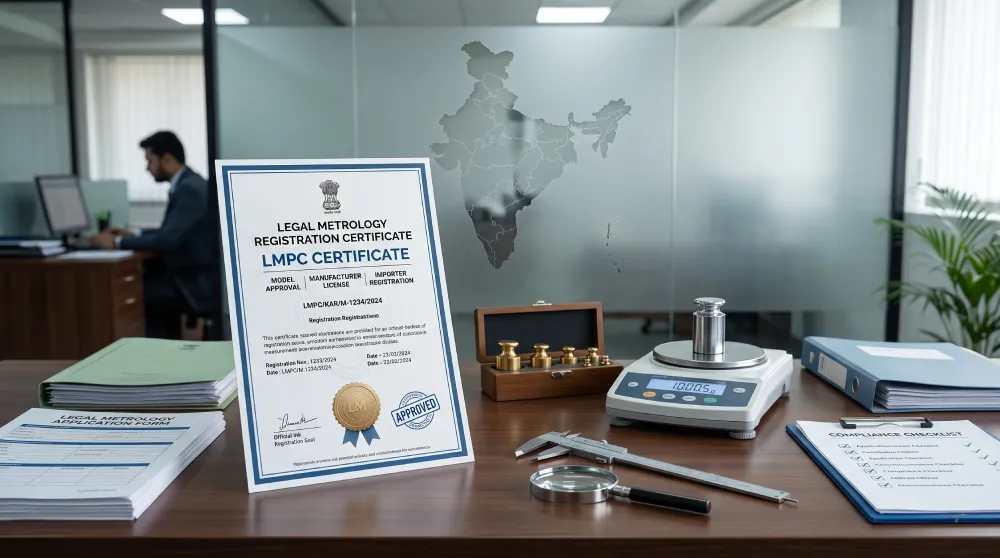
Upon successful verification and approval, the concerned Legal Metrology Authority issues the applicable Registration Certificate or License.
The certificate authorizes the applicant to legally manufacture, import, pack, repair, sell, or deal with weighing and measuring instruments or packaged commodities, as applicable.
Processing Timeline
The time required for obtaining Legal Metrology Registration depends on the type of registration, completeness of documents, inspection requirements, and approval by the concerned authority.
An estimated timeline is:
- Documentation Preparation: 3–7 Working Days
- Application Filing: 1–2 Working Days
- Department Verification: 7–20 Working Days
- Premises Inspection (if applicable): 5–10 Working Days
- Grant of Registration or License: Subject to Approval
The actual processing period may vary depending on the State authority and the category of registration.
Validity of Legal Metrology Registration
The validity period of a Legal Metrology Registration or License depends on the category of registration and the applicable State Legal Metrology Rules.
Businesses should ensure continuous compliance with all regulatory requirements during the validity period and renew the registration before its expiry to avoid business interruptions.
Renewal of Legal Metrology Registration
To maintain uninterrupted operations, businesses should apply for renewal well before the expiry of the existing registration or license.
The renewal process generally includes:
- Submission of Renewal Application
- Updated Business Information
- Valid Supporting Documents
- Payment of Renewal Fee
- Compliance Verification by the Department
Timely renewal helps businesses continue their operations without regulatory issues or penalties.
Cost Factors
The government fees and consultancy charges for Legal Metrology Registration may vary based on several factors, including:
- Type of Registration or License
- Nature of Business
- State Government Fee Structure
- Product Category
- Number of Products
- Import or Manufacturing Activities
- Documentation Requirements
- Inspection Requirements
- Renewal or Fresh Application
Bharati Global Compliances offers end-to-end assistance for Legal Metrology Registration, including documentation, application filing, coordination with the concerned authorities, compliance support, and renewal services, ensuring a smooth and efficient registration process across India.
Objectives of Legal Metrology
The Legal Metrology Act, 2009 was introduced to establish uniform standards for weights and measurements, promote fair trade practices, and safeguard consumer interests. The Act regulates businesses involved in manufacturing, importing, packing, selling, repairing, and using weighing and measuring instruments, ensuring transparency and accuracy in commercial transactions.
The key objectives of Legal Metrology include:
- Ensure accuracy and uniformity in weights and measurements.
- Protect consumers from unfair trade practices.
- Promote transparency in commercial transactions.
- Standardize weighing and measuring instruments across India.
- Regulate the manufacture, import, sale, repair, and use of weighing and measuring devices.
- Ensure compliance with labeling requirements for packaged commodities.
- Facilitate fair competition among businesses.
- Encourage consumer confidence and trust.
- Support domestic and international trade through standardized measurement systems.
- Strengthen regulatory compliance and market surveillance.
Functions of Legal Metrology
Legal Metrology plays a vital role in maintaining measurement accuracy and ensuring compliance with statutory requirements. It helps create a transparent marketplace where consumers receive the correct quantity of products and businesses operate under uniform standards.
The major functions include:
- Verification and calibration of weighing and measuring instruments.
- Issuance and renewal of manufacturer, dealer, and repairer licenses.
- Registration of importers and packers.
- Verification and stamping of weighing and measuring equipment.
- Inspection of business premises and measuring instruments.
- Monitoring compliance with the Legal Metrology Act and Rules.
- Enforcement of labeling requirements for packaged commodities.
- Conducting inspections to prevent unfair trade practices.
- Protecting consumers from inaccurate measurements.
- Promoting confidence in commercial transactions.
Packaged Commodities Registration (Rule 27)
Businesses involved in manufacturing, importing, packing, repacking, or selling pre-packaged commodities are required to comply with the Legal Metrology (Packaged Commodities) Rules, 2011.
Registration under Rule 27 is generally required for businesses dealing with products that are packed before sale and offered to consumers in a predetermined quantity.
The registration ensures that every package carries mandatory declarations prescribed under the Legal Metrology Rules.
Typical products covered include:
- Food Products
- Consumer Electronics
- Household Appliances
- Cosmetics
- Personal Care Products
- Packaged Beverages
- FMCG Products
- Industrial Consumer Goods
- Imported Packaged Commodities
Mandatory declarations generally include:
- Name and Address of Manufacturer, Importer, or Packer
- Country of Origin (for Imported Products)
- Generic Name of the Product
- Net Quantity
- Month and Year of Manufacture, Packing, or Import
- Maximum Retail Price (MRP)
- Consumer Care Details
Failure to comply with labeling requirements may attract penalties and regulatory action.
Exemptions Under Packaged Commodities Rules
Certain categories of products are exempt from specific provisions of the Packaged Commodities Rules, subject to the applicable conditions prescribed by the Legal Metrology Department.
Some commonly applicable exemptions include:
- Packages exceeding the prescribed quantity limits under the Rules.
- Commodities supplied exclusively to industrial consumers.
- Commodities supplied exclusively to institutional consumers.
- Certain agricultural products sold in large quantities.
- Specific categories of products notified by the Central Government.
Applicants should verify the latest exemption provisions before claiming any exemption.
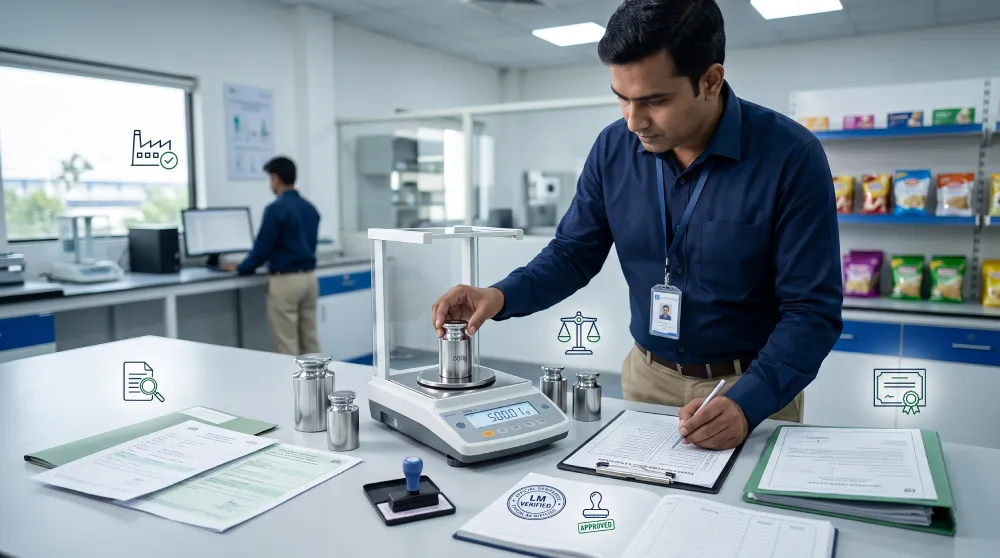
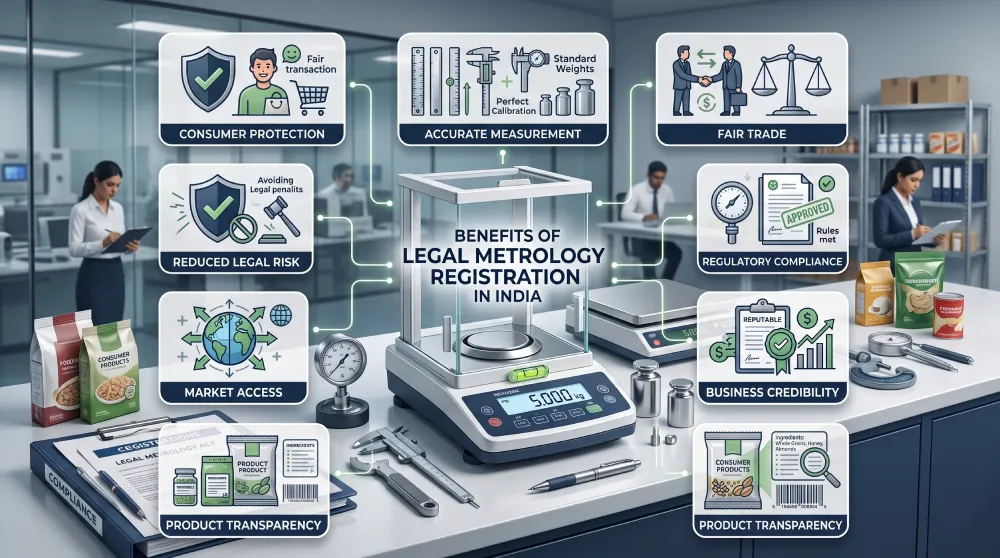
Benefits of Legal Metrology Registration
Obtaining Legal Metrology Registration offers numerous advantages to businesses while ensuring compliance with statutory requirements.
Regulatory Compliance
Registration ensures compliance with the Legal Metrology Act, 2009, and related rules, helping businesses operate legally.
Consumer Trust
Accurate weights, measurements, and proper product labeling increase customer confidence and improve brand reputation.
Fair Trade Practices
Legal Metrology promotes transparent business transactions by ensuring standardized measurements and preventing deceptive trade practices.
Smooth Market Access
Registered businesses can manufacture, import, package, and sell regulated products without unnecessary legal hurdles.
Reduced Legal Risk
Timely registration minimizes the possibility of penalties, product seizures, or business interruptions due to non-compliance.
Improved Business Credibility
Compliance with Legal Metrology requirements demonstrates professionalism and enhances business credibility among customers and regulatory authorities.
Better Product Transparency
Mandatory declarations on packaged commodities provide consumers with accurate information about the products they purchase.
Supports International Trade
Compliance with standardized measurement practices facilitates import and export operations while meeting regulatory expectations.
Offences and Penalties Under the Legal Metrology Act
Failure to comply with the provisions of the Legal Metrology Act, 2009 and the Legal Metrology (Packaged Commodities) Rules, 2011 may result in regulatory action by the concerned authorities.
Common violations include:
- Manufacturing or selling non-standard weighing and measuring instruments.
- Using inaccurate weighing or measuring devices.
- Selling packaged commodities without mandatory declarations.
- Operating without the required Legal Metrology Registration or License.
- Providing false or misleading labeling information.
- Violating the provisions relating to weights, measures, or packaged commodities.
Depending on the nature and severity of the violation, authorities may impose:
- Monetary penalties.
- Seizure of products or measuring instruments.
- Suspension or cancellation of licenses.
- Prosecution under applicable legal provisions.
- Other enforcement actions as prescribed under the Legal Metrology Act.
Why Choose Bharati Global Compliances?
Bharati Global Compliances provides comprehensive consultancy services for Legal Metrology Registration, LMPC Certificate, Manufacturer License, Dealer License, Repairer License, Importer Registration, and Packaged Commodity Registration across India.
Our services include:
- Eligibility Assessment
- Documentation Support
- Application Filing
- LMPC Certificate Assistance
- Manufacturer, Dealer & Repairer License
- Model Approval Guidance
- Compliance Management
- Renewal Assistance
- Regulatory Follow-up
- End-to-End Support
Our experienced consultants ensure a smooth, transparent, and timely registration process, helping businesses achieve complete compliance with the Legal Metrology Act, 2009 and the applicable rules.
Conclusion
Legal Metrology Registration is a mandatory compliance requirement for businesses involved in the manufacturing, importing, packaging, distribution, sale, or repair of weighing and measuring instruments, as well as pre-packaged commodities in India. Complying with the Legal Metrology Act, 2009 and the Legal Metrology (Packaged Commodities) Rules, 2011 helps businesses maintain transparency, ensure accurate measurements, protect consumer interests, and avoid legal penalties.
Whether you require an LMPC Certificate, Manufacturer License, Dealer License, Repairer License, Importer Registration, or Packaged Commodity Registration, obtaining the appropriate approval is essential for conducting business legally and building customer trust.
Bharati Global Compliances offers complete end-to-end assistance for Legal Metrology Registration across India. Our experienced compliance professionals handle documentation, application filing, regulatory coordination, and follow-up with the concerned authorities to ensure a smooth and hassle-free registration process.
If you are planning to manufacture, import, pack, or sell regulated products, our experts are ready to help you achieve complete Legal Metrology compliance quickly and efficiently.
Frequently Asked Questions (FAQs)
What is Legal Metrology Registration?
Legal Metrology Registration is a government approval required for businesses dealing with weighing and measuring instruments, packaged commodities, or related activities to ensure compliance with the Legal Metrology Act, 2009.
Who needs Legal Metrology Registration?
Manufacturers, importers, packers, dealers, repairers, warehouse operators, and businesses selling pre-packaged commodities may require Legal Metrology Registration, depending on their business activities.
What is an LMPC Certificate?
An LMPC (Legal Metrology Packaged Commodities) Certificate is mandatory for importers of pre-packaged goods intended for retail sale in India. It ensures compliance with labeling requirements under the Legal Metrology Rules.
Which authority issues Legal Metrology Registration?
Legal Metrology Registration and licenses are issued by the respective State Legal Metrology Departments or the Director of Legal Metrology, depending on the type of registration.
What documents are required for Legal Metrology Registration?
Commonly required documents include PAN, GST Certificate, Company Incorporation Certificate, Aadhaar of the authorized signatory, business address proof, product details, warehouse details, Import Export Code (for importers), and other supporting documents based on the registration type.
How long does the Legal Metrology Registration process take?
The processing time depends on the type of registration, document verification, and approval by the concerned authority. Complete applications generally receive approval within a few weeks, subject to regulatory processing.
Is Legal Metrology Registration mandatory for imported products?
Yes. Importers of applicable weighing instruments and pre-packaged commodities must obtain the required Legal Metrology Registration or LMPC Certificate before selling products in India.
What happens if a business operates without Legal Metrology Registration?
Operating without the required registration may result in penalties, product seizure, suspension of business operations, cancellation of licenses, or legal action under the Legal Metrology Act.
Can Legal Metrology Registration be renewed?
Yes. Most Legal Metrology registrations and licenses require timely renewal before their expiry to ensure uninterrupted business operations.
How can Bharati Global Compliances help?
Bharati Global Compliances provides complete assistance with eligibility assessment, documentation, application filing, LMPC Certificate, Manufacturer License, Dealer License, Repairer License, Importer Registration, compliance management, and renewal services across India.